
NEWS
PoliticsAfrica’s Largest Refinery Tightens Grip on 92% of Nigeria’s Petrol Market
By Emmanuel oniyide | 18th Mar 2026 | 7:01 AM
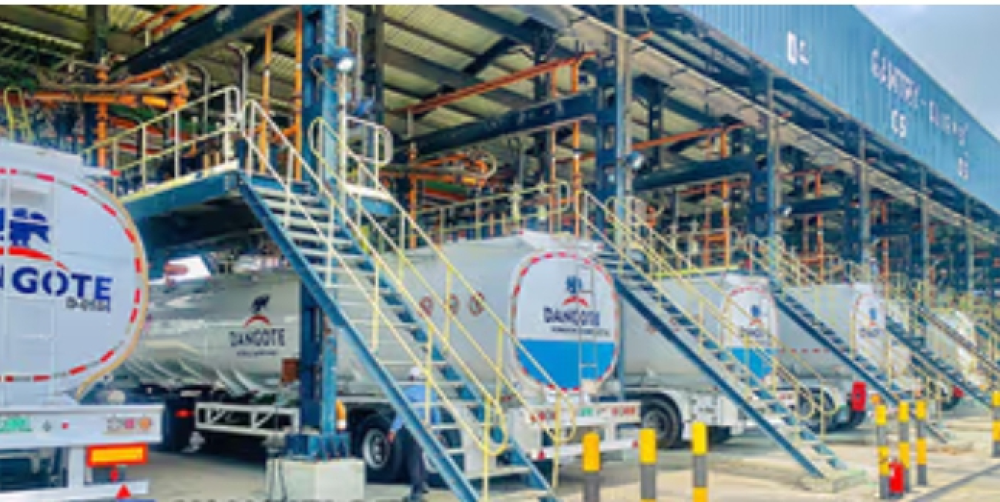

Petrol imports in Nigeria plummeted last month, as the Dangote Refinery dramatically scaled up local production to bridge the nation's energy gap.
Nigeria's petrol imports saw a historic drop in February, with the Dangote Refinery supplying the vast majority of the nation's fuel demand. Locally sourced fuel accounted for 92% of total demand, a feat that slashed daily imports to just 3.1 million liters.
Overall petrol supply fell by 39.1% from January—a decline of 25.4 million liters per day—driven primarily by this surge in domestic refining capacity.
The shift marks a major milestone for Africa's largest economy, which has long been reliant on foreign fuel.
According to an official factsheet on Nigeria’s midstream and downstream petroleum operations, total petrol supply dropped from 64.9 million liters per day in January to 39.6 million liters per day in February. This means locally refined petrol constituted approximately 92% of the total product supplied during the month. Consequently, as reported by Arise, only about 3.1 million liters of gasoline were imported daily, making up roughly 8% of the supply.
The factsheet also highlighted that domestic refining activity exceeded gasoline production levels. Last month, local refineries supplied an average of 8.2 million liters of fuel per day, despite several facilities experiencing operational challenges. Additionally, three modular refineries contributed modest but consistent volumes, averaging 0.368 million liters per day.
Despite the overall decline in fuel supply, the West African nation maintained a 31-day petrol sufficiency level, indicating adequate reserves to cover approximately one month of demand. For context, average daily gasoline consumption stood at 36.6 million liters, slightly below the total daily supply of 39.6 million liters. However, broader consumption data reveals sustained high demand: actual petrol usage—quantified by truck-out volumes—averaged 56.9 million liters per day, exceeding the national benchmark of 50 million liters per day by approximately 13.8%.
This steady increase in domestic refining capacity, particularly from the Dangote Refinery, is progressively dismantling the nation's reliance on imported petroleum. The trend signals an impending structural transformation within the downstream sector.
In a decisive policy shift last week, Nigeria suspended gasoline import licenses to prioritize local production from the Dangote Refinery. Oil marketing companies—including a unit of TotalEnergies SE, Conoil Plc, and MRS Nigeria Plc, which together accounted for about 25% of the country’s gasoline imports in January—had their licenses suspended. Under the new framework, import licenses will only be issued when local supply is insufficient to meet demand.
According to NMDPRA spokesperson George Ene-Ita, such a situation does not currently exist.





Comment on this Post
Comments (0)