
NEWS
PoliticsD'R Congo says Middle East Conflict Won't Derail Critical Mineral Supplies
By Emmanuel Oluwafemi Oniyide | 7th Jul 2026 | 9:52 AM
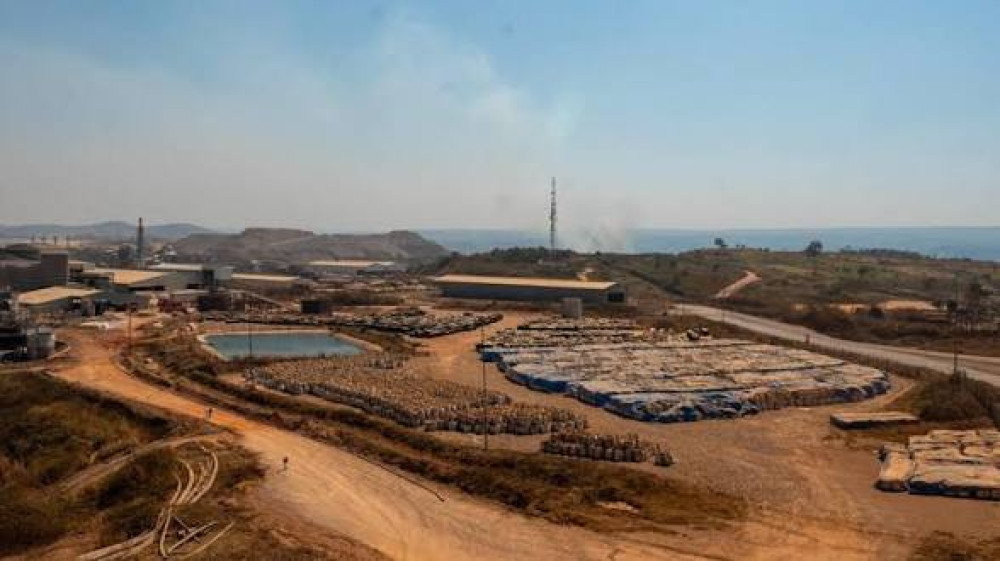

The Democratic Republic of Congo, the source of about 70% of the world's cobalt and the world's second-largest copper producer, does not expect this year's output of the critical minerals to suffer despite supply chain disruptions triggered by the recent conflict in the Middle East, a senior mining official told Reuters.
The reassurance is likely to calm concerns across global commodity markets after fears that disruptions to sulphuric acid supplies, a key chemical used to extract copper and cobalt from ore, could slow production in one of the world's most strategically important mining jurisdictions.
The concerns emerged after the conflict between Iran and Israel disrupted regional supply chains, tightening the availability of sulphuric acid, while neighbouring Zambia, one of Congo's principal suppliers, restricted exports to prioritise domestic mining companies. The shortages prompted some miners in Congo to assess whether they might have to reduce production if supplies failed to improve.
But according to Grace Mabaya, a senior official at Congo's Ministry of Mines, those fears have yet to materialise.
"At this stage, we have not observed any major impact on national production related to the supply of mining inputs," Mabaya told Reuters. He said the country's mining outlook for the remainder of 2026 remains broadly positive, supported by resilient operations and robust global demand for copper.
Copper and cobalt have become two of the world's most sought-after minerals as countries race to expand electricity grids, manufacture electric vehicles, build battery storage systems and develop artificial intelligence infrastructure. Copper is essential for power transmission, electric vehicles and data centres, while cobalt remains a critical component in many rechargeable batteries used in electric cars, consumer electronics and energy storage systems. That has made any potential disruption to Congolese production a closely watched risk for manufacturers, commodity traders and investors worldwide.
A prolonged shortage of sulphuric acid could have posed a significant challenge because the chemical is indispensable in the hydrometallurgical process used to separate copper and cobalt from ore. Without sufficient supplies, mining companies face slower processing rates, rising production costs and lower output.
So far, however, Congo's mining industry has continued to expand. Official government data show the country exported 823,887 metric tonnes of copper during the first quarter of 2026, an increase of 4.8% from the same period a year earlier. Exports of cobalt hydroxide climbed even faster, rising 24.5% to 51,940 tonnes, equivalent to about 17,054 tonnes of contained cobalt metal. Gold exports reached 6.3 tonnes, generating approximately $732 million in export earnings during the quarter.
According to Mabaya, many mining companies were insulated from the supply squeeze because they had secured long-term procurement contracts, built strategic inventories or diversified their chemical suppliers across the region. Those measures have helped prevent widespread operational disruptions despite temporary shortages. He cautioned, however, that companies could still face higher operating costs and longer delivery times if supply chain constraints persist.
"The outlook for the rest of 2026 remains broadly positive," Mabaya said, adding that miners continue to benefit from strong international demand for copper and stable production conditions.
The supply update comes as Congo is also reshaping the global cobalt market through government intervention. Earlier this year, authorities introduced export restrictions and production management measures aimed at addressing a prolonged oversupply that had depressed cobalt prices and reduced revenues for producers. The reforms reflect Kinshasa's broader ambition to exercise greater influence over a mineral in which it holds overwhelming global market dominance.
Chinese mining giant CMOC remained the country's largest exporter during the first quarter, while commodities trader Glencore also accounted for a significant share of copper and cobalt shipments.
Congo's ability to maintain production despite geopolitical disruptions offers reassurance to industries increasingly dependent on reliable supplies of critical minerals. For electric vehicle manufacturers, battery producers and technology companies, stable output from Congo reduces the immediate risk of supply shortages at a time when global demand for copper and cobalt continues to grow.
However, the episode also highlights how conflicts far beyond Africa can ripple through the continent's mining sector. A disruption to the supply of a single industrial chemical was enough to raise concerns over the availability of metals that underpin the global energy transition. For now, Congo appears to have weathered the shock. But the episode underscores the importance of building more resilient regional supply chains as geopolitical uncertainty increasingly shapes global commodity markets.





Comment on this Post
Comments (0)