
NEWS
PoliticsMining One Earns 25% Stake in Infinity Mining’s Tanjil Dome After High-Grade Gold-Antimony Results
By Emmanuel Oluwafemi Oniyide | 23rd Nov 2026 | 10:20 AM
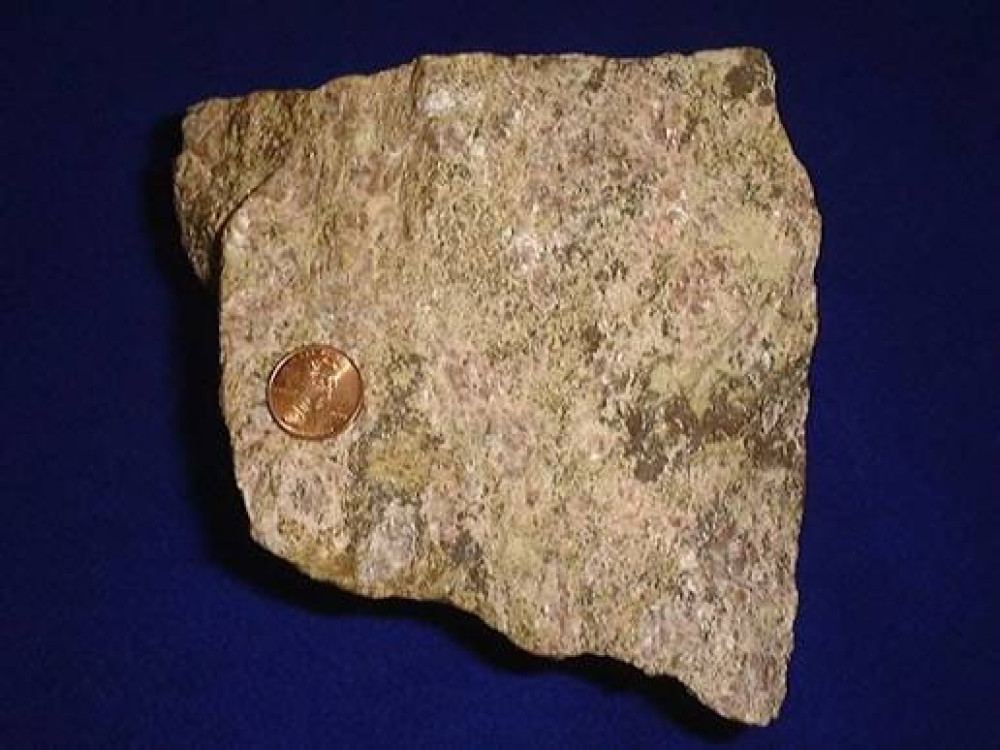

Infinity Mining Limited (ASX: IMI) has confirmed that geological consultancy Mining One Pty Ltd has earned an initial 25 per cent interest in its Tanjil Dome gold-antimony project in Victoria, after meeting the first expenditure milestone under a farm-in agreement signed in April 2026.
The milestone follows surface trenching results that returned up to 104.06 g/t gold equivalent (AuEq), highlighting the project’s gold and antimony mineralisation and triggering the first stage of the earn-in.
Mining One is now funding and operating the exploration programme and can increase its interest to a 51 per cent majority stake by completing a second stage of expenditure.
The binding farm-in and joint venture, announced on 27 April 2026, is structured in two stages. Mining One committed A$200,000** in initial exploration expenditure within 12 months to earn the initial **25 per cent** interest. To reach **51 per cent**, it must fund a minimum **1,500-metre reverse circulation or diamond drilling programme** estimated at **A$300,000 within a further 12 months. Total expenditure under the agreement is expected to be approximately A$500,000.
Infinity retains a free carry through the first stage and retains exposure to the project’s upside while leveraging external capital and technical expertise. Mining One, one of Australia’s largest private geological groups, is headquartered in Melbourne, near the project.
The trenching programme tested 10 trenches comprising 62 channel-sampling intervals over a combined 58.1 metres, within a broader ~1 kilometre gold and antimony soil anomaly.
The headline result came from trench TTD-002, which returned 4.9 metres grading 0.48 g/t gold and 7.71 per cent antimony, equivalent to 26.92 g/t AuEq. Within that interval, a narrower 1.2-metre section returned 0.46 g/t gold and 30.20 per cent antimony, translating to 104.06 g/t AuEq.
Technical clarification: The 104.06 g/t AuEq figure is a calculated gold-equivalent grade, not a gold assay of 104.06 g/t. Antimony contributes approximately 98 per cent of the TTD-002 composite, meaning the reported grade is driven overwhelmingly by antimony values rather than gold.
The calculation assumes a gold price of US$4,000/oz**, an antimony price of **US$50/kg, and recoveries of 85 per cent for gold and 75 per cent for antimony. No project-specific metallurgical test work exists.
Other results included TTD-008 returning 0.6 metres at 1.22 g/t gold and 3.69 per cent antimony (13.89 g/t AuEq), and TTD-006 returning 5 metres at 1.3 g/t gold and 0.02 per cent antimony (1.37 g/t AuEq).
Mineralisation has been defined within dyke intrusions and associated quartz veining, with mapping identifying at least three quartz vein exposures within a weathered, altered dyke, along with stibnite replacement mineralisation. Mining One Geology Manager Stuart Hutchin said the mapping and assays reveal two distinct styles of antimony mineralisation: quartz vein-hosted and hydrothermal replacement within intrusive units. "The recognition of replacement-style mineralisation suggests that antimony mineralisation is not restricted to discrete quartz veins," Hutchin said.
Infinity has noted that the geology at Tanjil Dome shares early key similarities with Southern Cross Gold's Sunday Creek gold-antimony deposit, approximately 100 kilometres away. However, the comparison is based on geological characteristics and does not establish that the two deposits have similar size or economic potential.
A submission for the maiden drilling programme has been lodged with Victoria's Department of Energy, Environment and Climate Action (DEECA) for approval. Further trenching assays are imminent, and exploration is continuing at Tanjil Dome and the nearby Good Hope prospect.
The joint venture plans to integrate the assays with channel geology, mapped contacts, structural measurements and earlier soil-sampling data to refine follow-up targets.
"We are delighted that Mining One has earned a 25 per cent stake in the Tanjil Dome project," said Infinity Executive Chairman Cameron Petricevic. "They are highly regarded exploration specialists and their work at the project has been outstanding, working in perfect synergy with our existing team at Infinity.
The initial results support the joint venture's belief in the immense potential of the Tanjil Dome project".
Hutchin added: "It is early days, but the geology clearly has many of the important characteristics we are looking for in locating mineralisation and the trenching assays have been very promising".
The 25 per cent earn-in is a validation of Mining One's technical work and of the project's surface mineralisation. But the project remains at an early exploration stage: the surface results have not established a mineral resource, and the continuity, true widths and depth extent of the mineralisation remain unconfirmed. The soil anomaly is a geochemical footprint only.
The next catalysts are the remaining trench assays, DEECA's approval of the drilling programme, and the results of the maiden drill campaign—which will determine whether the high-grade antimony at surface extends at depth. For Infinity, the farm-in structure means the exploration is funded at no cash cost to the company while it retains a 49 per cent interest if Mining One completes the second stage. For Mining One, the 51 per cent path to majority ownership is now live, contingent on a drill programme that has yet to be approved.





Comment on this Post
Comments (0)