
NEWS
PoliticsRace for South Africa's Nuclear Reactor Contract Pits Russia's Rosatom Against Western Rivals
By Emmanuel Oluwafemi Oniyide | 21st Jul 2026 | 8:57 AM
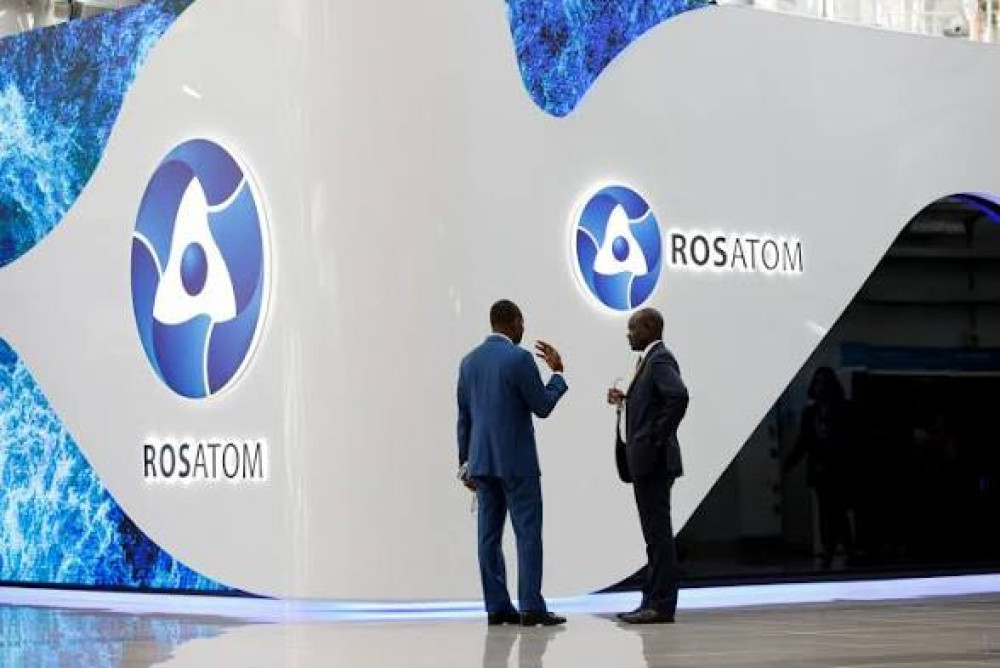

South Africa is pressing ahead with plans to expand Africa's only commercial nuclear power programme despite recent safety incidents at the Koeberg Nuclear Power Station, setting the stage for a high-stakes contest among global reactor builders led by Russia's Rosatom and its Western rivals.
South Africa's decision to press ahead with plans to expand its nuclear power programme has set the stage for a high-stakes contest among the world's leading reactor builders, with Russia's Rosatom expected to face stiff competition from Western and Asian rivals for one of Africa's most strategically important energy projects.
The move comes despite recent safety incidents at the Koeberg Nuclear Power Station, Africa's only commercial nuclear plant, where elevated airborne radioactive contamination was detected inside controlled areas in late June and early July.
According to South Africa's National Nuclear Regulator (NNR), the incidents were contained within the facility, affected only a small number of workers under strict monitoring, and posed no risk to nearby communities or the environment.
Electricity and Energy Minister Kgosientsho Ramokgopa has reiterated that the government remains committed to procuring 2,500 megawatts of new nuclear capacity as part of efforts to strengthen energy security, reduce reliance on coal and meet long-term climate goals.
South Africa remains the only African country operating a commercial nuclear power station. Koeberg, located about 30 kilometres north of Cape Town, has generated electricity since the mid-1980s and remains a key source of reliable baseload power for the national grid.
Unlike Egypt, which selected Russia's Rosatom to build its El Dabaa Nuclear Power Plant, South Africa is expected to run a competitive procurement process that could attract bids from Rosatom, France's EDF and Framatome, South Korea's Korea Hydro & Nuclear Power (KHNP), China's China National Nuclear Corporation (CNNC), and U.S.-based Westinghouse.
France enters the race with an established relationship, having supplied the technology used at Koeberg and supported the plant's recent life-extension programme. Westinghouse has long provided nuclear fuel and engineering services, while South Korea and China have emerged as increasingly competitive exporters of nuclear technology.
For Rosatom, however, South Africa represents an opportunity to deepen its already significant footprint in Africa. The Russian state-owned company is constructing Egypt's El Dabaa nuclear plant and has signed nuclear cooperation agreements with several African countries, including Burkina Faso, Rwanda, Uganda, Ethiopia and the Republic of Congo. Its model of combining financing, reactor construction, fuel supply and workforce training has helped make it the continent's dominant nuclear partner.
South Africa's approach also reflects lessons from the collapse of the controversial Rosatom-backed nuclear deal proposed under former President Jacob Zuma.
In 2017, South Africa's High Court ruled that the procurement process was unlawful, forcing the government to restart its nuclear ambitions under stricter transparency and competitive bidding rules.
As governments across Africa increasingly consider nuclear energy to meet rising electricity demand and decarbonisation targets, South Africa's next procurement is expected to be closely watched.
The outcome will not only determine the future expansion of Africa's only commercial nuclear power programme but could also reshape the balance of influence among global nuclear suppliers competing for a larger share of the continent's energy market.



Comment on this Post
Comments (0)