
NEWS
PoliticsSouth Africa Races to Secure New Energy Suppliers as Middle East Conflict Drags
By Emmanuel oniyide | 18th Mar 2026 | 7:12 AM
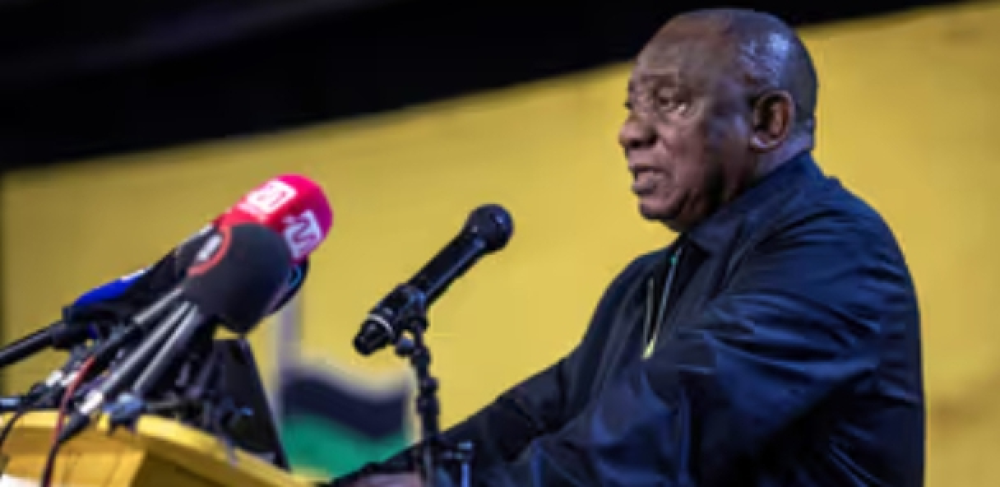

South Africa is actively pursuing alternative energy suppliers as the conflict in the Middle East continues to disrupt global oil markets.
President Cyril Ramaphosa announced the ANC’s 10-point plan and “Economic War Room” to tackle South Africa’s economic crisis amid labour tensions and financial strain within the ruling party.
· South Africa is seeking new sources of energy imports following disruptions caused by the ongoing conflict involving the US, Israel, and Iran in the Middle East.
· The closure of the Strait of Hormuz has severely limited South Africa's fuel imports, which previously came predominantly from Middle Eastern countries such as Oman, Bahrain, and the UAE.
· South Africa has lost half of its refining capacity in recent years due to plant closures resulting from operational issues and a lack of capital investment.
· Rising global oil prices—now above $100 per barrel as a result of the Iranian crisis—are hitting African economies hard, driving higher fuel costs and inflation.
South Africa has announced that it is seeking additional energy suppliers, following disruptions to energy product flows caused by the escalating conflict between the United States and Israel and Iran.
According to Bloomberg, the disruption of fuel imports from the Middle East represents the most significant energy risk currently facing the country.
Speaking at a conference in Cape Town on Monday, Minister of Mineral and Petroleum Resources Gwede Mantashe revealed that President Cyril Ramaphosa’s administration is in discussions to secure new supply partners, after the fighting reduced trade passing through the strategic Strait of Hormuz to a trickle.
The war in Iran has disrupted transit through the Strait of Hormuz, a critical route for global trade.
“For refined products, we rely on the Middle East,” he said, adding that disruption to fuel shipments is the “biggest threat” to the country.
South Africa has seen half of its refining capacity disappear in recent years, largely due to plant closures caused by operational incidents and insufficient capital.
As the country’s reliance on imports has grown, its primary suppliers of diesel have been Oman, Bahrain, and the United Arab Emirates.
South Africa is far from the only nation feeling the effects of the Middle East conflict.
African economies are now being rattled by a surge in global oil prices, which reached $105 per barrel on Tuesday, driven by the intensifying crisis involving Iran.
This increases the likelihood of higher fuel prices, rising inflation, and renewed pressure on the continent’s already fragile currencies.
Most African countries depend heavily on imported petroleum products—even those that produce crude oil—leaving their economies vulnerable to disruptions in global supply chains, particularly those linked to the Middle East, which remains central to global energy flows.
According to Nick Hedley, an analyst at Zero Carbon Analytics, the continent’s structural dependence on imported fuels makes it especially susceptible to global energy disruptions.
This challenge is complex and may prove difficult to address through conventional means.
Even Nigeria, Africa’s largest oil producer and home to the world’s largest single-train refinery—both factors that might typically insulate it from such global shocks—has seen a sharp increase in fuel prices.
In North Africa, the effects of the conflict are visible in countries like Egypt. East Africa, too, has been impacted: earlier reports indicated that Kenyan authorities were closely monitoring a fuel tanker scheduled to load petroleum products from the Middle East in the Red Sea—supplies critical to the country’s economy.
Much like South Africa, Kenya relies heavily on imported refined petroleum products sourced mainly from the Middle East, under government-to-government supply agreements with national oil companies in Saudi Arabia and the United Arab Emirates.
As a result, Kenya is likely to face similar challenges and, by extension, may need to pursue comparable initiatives.





Comment on this Post
Comments (0)