
NEWS
PoliticsTinubu Calls for African Alliance to End Raw Mineral Exports, Unveils Continental Framework
By Emmanuel Oluwafemi Oniyide | 22nd Sep 2026 | 9:54 AM
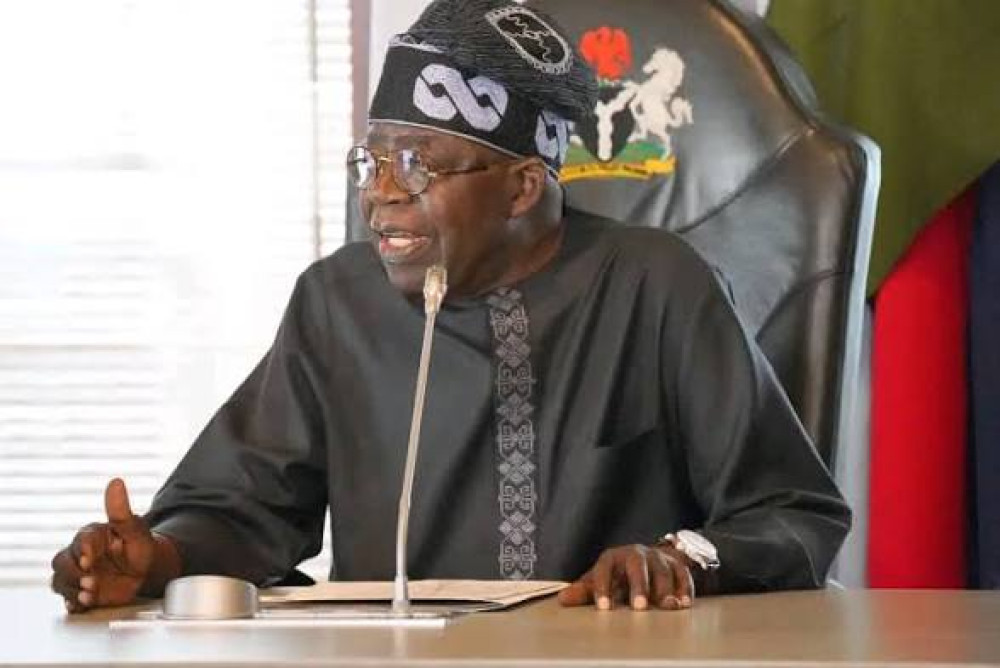

President Bola Ahmed Tinubu has called for a coordinated continental effort to ensure Africa stops exporting raw mineral resources and instead develops local processing, manufacturing and value-added industries, warning that the continent cannot achieve the transformation individually.
Represented by Vice President Kashim Shettima, Tinubu made the call at the Africa Minerals Strategy Group (AMSG) High-Level Roundtable on Critical Minerals Development in Africa, held on Monday, September 21, 2026, on the sidelines of the 81st United Nations General Assembly in Manhattan, New York.
“The real value of Africa’s enormous mineral endowment should ultimately be measured by its impact on ordinary Africans,” Shettima said. He challenged African countries to move away from an economic model in which raw resources leave the continent while finished products return at significantly greater value.
Shettima stressed that greater continental cooperation on mineral governance would enable Africa to strengthen its negotiating power and capture more value from global supply chains. He urged AMSG members to develop bankable projects capable of attracting investment into processing, manufacturing and other value-adding activities, saying such projects should create employment, stimulate industrialisation and ensure mineral-producing communities receive tangible benefits from resources extracted from their environments.
The roundtable, themed “From Resources to Wealth: Continental Cooperation for Mineral Value Addition,” brought together Heads of State, ministers, CEOs, development finance institutions and global investors. It was convened by Tinubu in his capacity as Chairperson of the AMSG General Assembly.
The meeting considered the proposed Continental Integration and Economic Assurance Declaration (CIEAD), a framework aimed at establishing coordinated cooperation on Africa’s critical and solid mineral value chains. The declaration builds on the Mutual Assured Development (MADE) Framework launched at the African Natural Resources and Energy Investment Summit in Abuja earlier in 2026.
The proposed framework would cover policy coordination, investment mobilisation, local value addition and supply-chain security. AMSG is also proposing a CIEAD Finance Window to mobilise funding for mineral processing, infrastructure and technology needed to develop competitive value chains within Africa.
Shettima highlighted Nigeria’s ongoing mining-sector reforms, including local value addition, improved geological data, the formalisation of artisanal mining, stronger regulation and efforts to combat illegal mining.
Nigeria’s Minister of Solid Minerals Development and AMSG Chairman, Dr Dele Alake, called for urgent reforms to integrate artisanal miners into regulated mining systems, saying governments should distinguish artisanal miners seeking legitimate livelihoods from illegal operators involved in criminal activity.
“Illegal mining must remain illegal, but artisanal miners should have a structured framework that allows them to operate legally and safely,” Alake said. He noted that many artisanal miners were breadwinners whose families depended on mining for survival, and expressed concern over recurring mine-site collapses across Africa, saying preventable deaths demonstrated the urgent need for stronger safety standards.
According to the President, Nigeria’s mining revenue rose from approximately ₦6 billion in 2023 to over ₦38 billion in 2024 — a sixfold increase — and reached between ₦68.1 billion and ₦70 billion in 2025. The revenue growth has been attributed to tighter licensing, enforcement of value-addition rules and new industrial investments.
Kenya’s Cabinet Secretary for Mining, Blue Economy and Maritime Affairs, Hassan Ali Joho, called for greater sharing of geological and mineral data among African countries. The AMSG comprises more than 30 African countries and seeks to give the continent a stronger collective voice on mineral governance, local processing and positioning within global supply chains.
Tinubu urged African countries to speak with one voice in protecting their collective interests, while promoting responsible investment, technology partnerships and industrial development across the continent. The AMSG is expected to continue pursuing cooperation on mineral governance, local processing, shared infrastructure and geological data systems as part of efforts to strengthen Africa’s position in global mineral supply chains.




Comment on this Post
Comments (0)