
NEWS
PoliticsTrump’s Russian Diesel Deal Triggers Bipartisan Backlash
By Emmanuel Oluwafemi Oniyide | 12th Oct 2026 | 9:33 AM
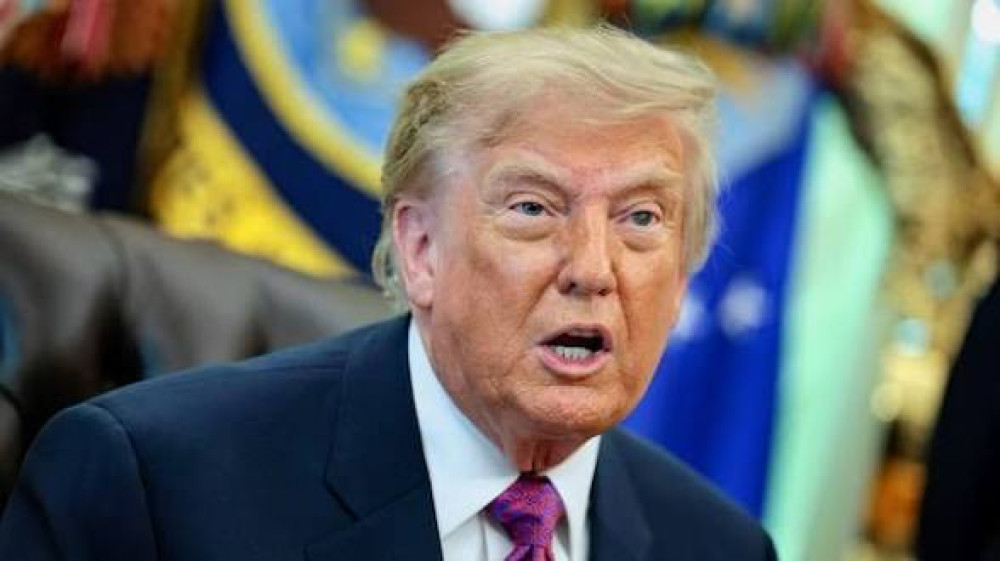

President Donald Trump’s decision to lift sanctions on Russian diesel in exchange for fuel supplies has ignited a fierce bipartisan backlash, with lawmakers from his own party joining Democrats to accuse him of violating U.S. law and providing a “financial lifeline” to a “murderous regime.”
The deal, announced by Trump on Truth Social on Friday, October 9, 2026, following a conversation with Russian President, Vladimir Putin, would see Russia “immediately supply over 300,000 Tons of Diesel Fuel to the American and Global Marketplace”.
Additional shipments of 500,000 tons in November and 1,000,000 tons “immediately thereafter” were also promised, with a total of up to 4.8 million metric tons of diesel pledged.
The U.S. Treasury Department issued a temporary licence lifting sanctions on Russian diesel through April 7, 2027.
Bipartisan Legal Challenge
A bipartisan group of senators — including four Republicans and three Democrats — issued a joint statement on Sunday demanding the administration “immediately reverse course,” arguing the deal directly contravenes a 2022 law that banned Russian energy imports.
The lawmakers include Republican Senators Susan Collins (Maine), Thom Tillis (North Carolina), Lisa Murkowski (Alaska), and John Curtis (Utah), alongside Democrats Jeanne Shaheen (New Hampshire), Richard Blumenthal (Connecticut), and Ron Wyden (Oregon).
“Congress explicitly banned Russian energy imports in 2022 to prevent American dollars from financing Putin’s brutal war against Ukraine,” the senators wrote. “President Trump’s decision to allow Russian diesel imports to the U.S. runs directly counter to that law”. They also noted that the administration failed to consult with Congress or submit any explanation to justify its decision as required by statute.
Senator Tillis told NBC’s “Meet the Press” that he believed there was “a legitimate case for saying the president’s not following the law”. He also warned the deal “absolutely will” put American lives at risk, pointing to Russia’s relationship with Iran and its funding of mercenaries.
“A Murderous Dictator”
The criticism was not limited to legal concerns. Democratic Senator Elizabeth Warren called the announcement “a disgrace,” writing that Trump could lower fuel prices by “ending his illegal war with Iran” instead of “funding Putin’s war machine”. Democratic Senators Shaheen, Schumer, and Warren issued a joint statement describing the deal as “a total betrayal of Ukraine, our European allies and American national security,” adding that the President was resorting to “desperate ‘deals’ with a murderous dictator to attempt to clean up his own mess”.
Republican Congressman Don Bacon of Nebraska said “propping up Putin’s war economy is morally wrong as he uses that money to bomb cities”. Former Vice President Mike Pence called the decision a “betrayal” of the legacy of the late Senator Lindsey Graham, for whom the 2026 Russia sanctions act was named.
White House Defends Deal
Treasury Secretary Scott Bessent defended the agreement on Fox News, saying the administration would “follow through with the deal using existing legal authority”. “Anybody in Congress who claims that either the old act or the current act by Graham prohibits us from doing that is wrong,” Bessent said. Senate Majority Whip John Barrasso also defended the move, saying Trump was “weighing various factors” and “has to make difficult decisions”.
Limited Market Impact Expected
Analysts have expressed scepticism that the deal will meaningfully lower diesel prices. The International Energy Agency estimates Russian diesel output has fallen by about 30 per cent. Energy experts told Czech media the deal’s impact on prices would “probably be small,” while German analysts said it would neither lead to lower prices at U.S. or European pumps nor significantly change global market prices.
The deal comes as diesel prices in the U.S. have reached $6.28 a gallon — nearly double the price a year ago — putting political pressure on Republicans ahead of the midterm elections. Trump has blamed Ukrainian strikes on Russian refineries for higher costs, while critics point to the war in Iran.
Ukrainian President Volodymyr Zelensky condemned the agreement, saying it gives Russia “more money for this war, more money to inflict suffering on us, without a doubt”.





Comment on this Post
Comments (0)