
NEWS
PoliticsCSIR Tests Acoustic Rock-sounding Tech at Harmony's Mponeng Mine
By Emmanuel Oluwafemi Oniyide | 30th Aug 2026 | 8:10 AM
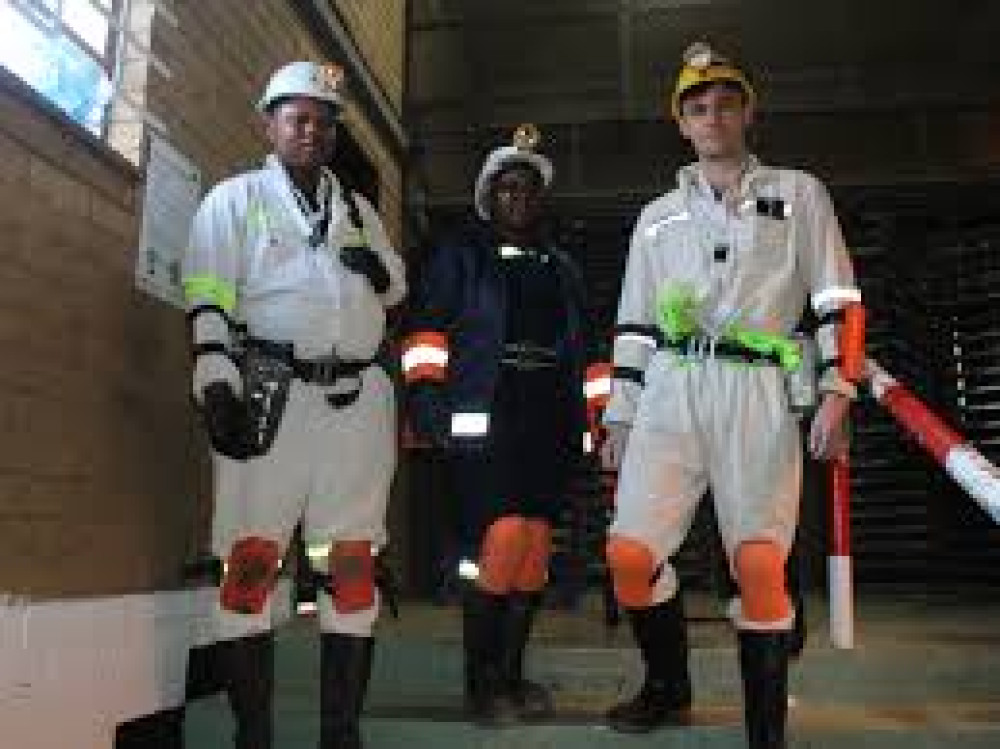

South Africa's Council for Scientific and Industrial Research has successfully completed an underground proof-of-concept field test of an acoustic rock-sounding application at Harmony Gold's Mponeng Mine, the world's deepest operational gold mine, as the country's mining sector looks to technology to address safety risks.
The field trial, concluded on July 16 in collaboration with the mine's Rock Engineering team, marks a step toward digitalising underground workplace examination and fall-of-ground risk management practices.
The technology, developed through a collaborative research initiative between the CSIR and Peralex Electronics, uses advanced acoustic signal processing and machine-learning techniques to analyse rock-sounding responses and classify them according to characteristics associated with solid or potentially loose ground conditions.
"The Mponeng field test provided valuable real-world insight into how the acoustic rock-sounding application performs in an underground mining environment. It confirmed the technical feasibility of the concept while also identifying the practical refinements required before operational deployment," said Heinrich Greeff, CSIR Project Lead.
Falls of ground remain one of the most critical safety risks in deep-level mining. Barring and rock sounding have long been used by mineworkers to identify and remove potentially loose or hazardous rock. While experienced personnel are highly skilled in recognising sounding responses, interpretation can vary between individuals and may be influenced by environmental conditions such as underground noise and fatigue.
The technology is intended to complement, rather than replace, the expertise of trained underground personnel.
Beyond assisting with current workplace examination activities, the system digitally captures acoustic strike data, establishing a foundation for trend analysis, hazard tracking and future integration with spatially referenced ground control systems.
The next phase aims to transition the system from a proof-of-concept mobile application to a controlled operational pilot.
The test comes as President Cyril Ramaphosa launched the third phase of South Africa's Government-Business Partnership for Growth and Jobs on August 20.
Minerals Council South Africa has responded positively to the launch, with mining now included as one of the partnership's work streams alongside tourism, agriculture and agro-processing.
"The inclusion of mining in phase three of the partnership recognises that unlocking growth, investment and jobs depends on unlocking the full potential of the sector," said Shamini Harrington, the Minerals Council's senior executive. "At a time of rising global demand for critical minerals, the moment is definitely now. Working in partnership with the DMPR and government, we have a huge opportunity to remove practical barriers, restore investor confidence, and convert mineral wealth into economic growth that benefits all South Africans."
Minerals Council CEO Mzila Mthenjane estimated the mining sector could generate up to 50,000 new jobs by 2030, driven by improved transport networks and reliable power. The partnership aims to boost South Africa's economic growth to 3% and create 1 million jobs by 2030.
Meanwhile, emerging researchers will on October 2 have a next-generation platform to explore the future of the minerals industry, hosted by South Africa's scientific and research community.




Comment on this Post
Comments (0)