
NEWS
Special ReportFive Confirmed Dead, Total Casualties Uncertain in Taraba Mine Collapse
By Steadfast Mgbeahurike | 23rd Sep 2026 | 7:12 PM
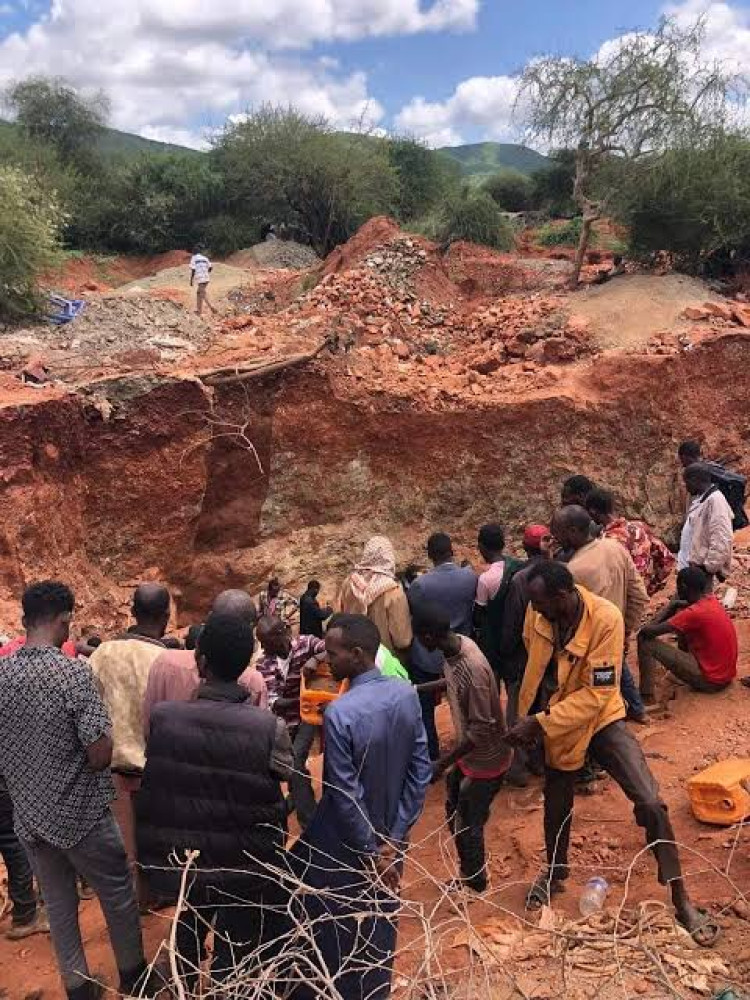

A mining pit collapsed at Mayo Kam community in Bali Local Government Area of Taraba State on Thursday, September 17, 2026, killing at least five artisanal miners, with conflicting accounts placing the toll as high as 20.
The incident has renewed concerns over unregulated mining in the state, where unlicensed operations continue despite an existing ban.
The Taraba State Police Command confirmed that five bodies were recovered from the collapsed pit. Spokesperson ASP Victor Mshelizah said five miners were dug out following efforts by local residents, and that search operations were ongoing to determine whether more miners remained trapped.
The state task force had recently dispersed miners from the site, seizing their machines and sending away alleged illegal miners from Zamfara, Bauchi, Sokoto, Cameroon and Chad.
Initial reports from residents and community leaders claimed more than 20 people, including women and children, were feared dead. Kenneth Ayila, a resident of Mayo-Kam, told reporters that over 20 people were trapped or killed when the pit suddenly collapsed. Community leader Mallam Usman Bello confirmed the incident, saying most of the victims were indigenes of Mayo-Kam and that the tragedy had plunged residents into shock and grief.
However, eyewitnesses who participated in the rescue operation disputed that figure. Umar Ali, a rescuer, said only five miners were trapped inside the pit when it caved in, with four bodies recovered dead and one person rescued alive. "We kept digging for two days, from the day it happened till the following day, and we were sure that nobody remained there," Ali said. "Sincerely, four people were first rescued, while the fifth person, surprisingly, was discovered to be breathing when he was brought out".
A youth leader from Kankani village, Garrison Godwin, also told Leadership that reports claiming about 20 people died were false, confirming only five people were believed to have been inside the pit. He said the collapsed pit was dug in the form of a well and was not particularly deep, which enabled rescuers to recover the bodies. Godwin added that the miners had continued their activities despite rainfall, saying the soil eventually became unstable and collapsed while they were extracting minerals.
The incident has raised fresh questions about mining activities in Taraba State, particularly amid reports of an existing ban on illegal mining operations. The state government had banned illegal mining activities across the state through Order 6, insisting that responsible mining remains the way forward for developing its mineral resources.
Residents had also protested in the past over the effects of mining activities in their community and called for government intervention.
Bali is one of the local government areas in Nigeria with many mineral deposits. Although Taraba State has banned unlicensed operations, people — many of them locals — continue to enter unsafe pits.
The incident comes as the Nigeria Security and Civil Defence Corps (NSCDC) reports a sharp increase in mining revenue, crediting its Mining Marshals unit with curbing illegal mining and improving compliance. Revenue from the solid minerals sector rose from about ₦6 billion in 2023 to over ₦70 billion by June 2026 — a 337% increase — according to data from the Solid Minerals Development Fund (SMDF).
"In 2025, the report we got was N38 billion. In 2026, we are now moving towards N80 billion, and we hope to hit that target too," said Atta John Onoja, Commander of the NSCDC Mining Marshals, at the 8th NSCDC Lagos PR Clinic in Ikeja on Thursday.
The Mining Marshals, established in March 2024, have arrested 671 suspected illegal miners nationwide, with 397 cases brought before the Federal High Court in Abuja and several convictions secured. Onoja said the unit had dismantled illegal mining sites, confiscated equipment and restored mining locations to licensed operators.
He credited improved compliance to the enforcement drive, noting that legitimate operators "do not want to be arrested in the same way other illegal miners have been arrested".
Onoja acknowledged operational challenges including inadequate logistics, personnel and equipment, and called for increased budgetary allocation, deployment of surveillance technology and the designation of special Federal High Court judges to fast-track illegal mining cases.
The tragedy follows a separate incident in which 37 suspected illegal miners died in NSCDC custody in Niger State, and a pit collapse in Kogi State that killed over 20 miners. The incidents have spurred calls for sector reforms. A study published in the Benue Journal of Social Sciences documented 118 illegal mining suspects reported across 11 Nigerian states between 2018 and 2024, with Nasarawa State recording the highest number at 22 in 2024, followed by Benue with 18 in 2023 and Zamfara with 15 in 2018.




Comment on this Post
Comments (0)