
NEWS
PoliticsLithium Rush Pushes Bandits to Nigeria's South-West as Old Oyo National Park Becomes New Battleground
By Emmanuel Oluwafemi Oniyide | 4th Sep 2026 | 10:03 AM
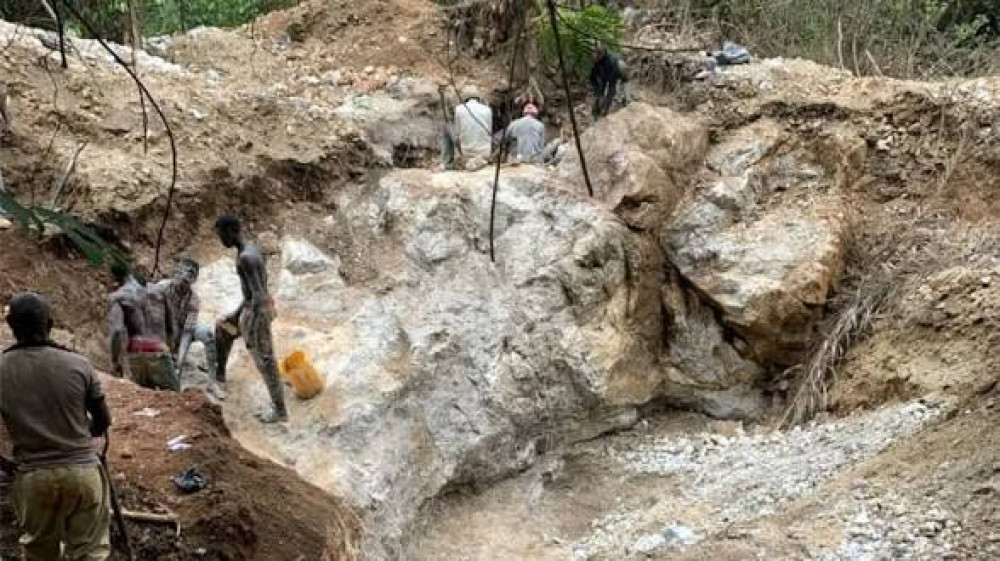

Armed bandits are exploiting illegal lithium mining in Old Oyo National Park to finance their operations, security officials have said, as the intense military offensive against terrorists in northern Nigeria pushes armed groups to seek new territory southward.
Spanning 10 local government areas in Oyo State and one in Kwara State, the park has become a magnet for armed groups drawn by rich deposits of lithium and other solid minerals critical to the global shift toward renewable energy.
The infiltration threatens to undermine the very purpose for which the federal government established the reserve to conserve the archaeological and historical remains of the old Oyo Empire.
The vulnerability follows documented migration patterns of armed groups moving from Zamfara through Katsina, Kaduna and Niger states before reaching Kwara and now Oyo.
"Wherever you have natural resources, certainly, you may need to be facing challenges of intruders who are unmindful of whatever happens but only interested in exploring mineral resources," said Teslim Kareem, the Conservator of the Park in charge of Old Oyo National Park.
On January 6, 2026, an attack on Oloka Village in Oriire Local Government Area left five rangers dead: Hameed Quadri, Muideen Olalere, Ololade Hassan, Moses Areo and Ezekiel Ajala. The traditional ruler of Oloka Village, Mr Joel Olatunde, initially suspected the attack was carried out by bandits attempting to free herders detained by park rangers for illegal entry into the park.
However, sources including locals and park officials told The ICIR that the detainees were allegedly illegal miners, not herders, and that illegal miners had hired bandits to secure the release of their detained colleagues forcibly.
"Lithium is present in Banni Village," said Fakayode Adebowale, a former zonal coordinator of Amotekun Corps in Oyo State, identifying it as a "known site" of illegal mining.
On May 15, 2026, terrorists stormed Ahoro-Esiele and Yawota communities in Oriire LGA, abducting 35 pupils and seven teachers. The pupils and five teachers were rescued nearly two months later, but a mathematics teacher, Mr Michael Oyedokun, was beheaded, and Mr John Olaleye was murdered in captivity. The assistant headmaster of L.A. Primary School in Ahoro-Esinele, Mr Adesiyan Adegboye, was also killed alongside a motorcyclist.
Adebowale said that security agencies are aware of illegal mining activity in the area and argued that the more recent infiltration by armed groups could have been prevented had earlier intelligence and the bandits' documented migration pattern been acted on swiftly.
Kareem identified Chinese nationals as the principal enablers of the illicit mining economy in the park, working with Nigerian collaborators of various ethnic backgrounds as well as citizens of neighbouring West African countries.
"We have arrested people from different tribes, not just the northerners. Foreigners are also part of the illicit mining," he said.
Adebowale claimed some local youths and community leaders have equally been drawn into the illegal mining economy, working alongside the miners who employed them for on-site labour and transporting minerals from the mining sites to urban centres. He named the Daba and Abata-Abu axes in Oke-Ogun, and the Igbeti–Kisi corridor spanning Olorunsogo, Atisbo and Irepo local government areas, as other hotspots for illegal lithium and gold extraction within the park.
Kareem said the park's ongoing conservation sensitisation programme has significantly reduced local complicity, and community leaders now serve as a source of useful intelligence. "Most of their leaders even call us sometimes if they notice any strange things, which we always deal with seriously," he said.
Seven months on, Oloka remains gripped by fear over safety and livelihood. "Our way of life has been badly affected since the attack, because life has been very tough for our people, even to go to the farm. Once it is 7 pm, people can hardly sleep again," community chief Alagbe said.
The Baale said residents have continued to flee the community after the withdrawal of security agents. "Presently, there is no security, because the operatives were withdrawn after one month," he said. In their absence, local hunters have imposed a 10:30 pm to 5:30 am curfew restricting movement to help maintain vigilance over the village.
Another resident, Elizabeth Adedokun, described a similar unease. "We're frightened to go to the farms, and when we do, we go in pairs, so that while someone is working, the other person is keeping watch," she said. "But with what happened, we feel vulnerable and insecure today. We are very sad."
Kareem sought to allay such fears, explaining that rangers now operate alongside a joint security team of about 2,000 operatives, in addition to the regular ranger corps, with a command base organising patrols from Ikoyi-Ile. He noted that President Bola Tinubu has approved the permanent siting of a military base, alongside National Forest Rangers, within the park.
The conservator added that the park, once seen as a potential last resort for fleeing bandits, is proving "more dangerous than where they're coming from."





Comment on this Post
Comments (0)