
NEWS
PoliticsMalaysian Parliamentary Committee Demands Government Stance on Lynas-Pentagon Rare Earths Deal
By Emmanuel Oluwafemi Oniyide | 20th Jul 2026 | 9:03 AM
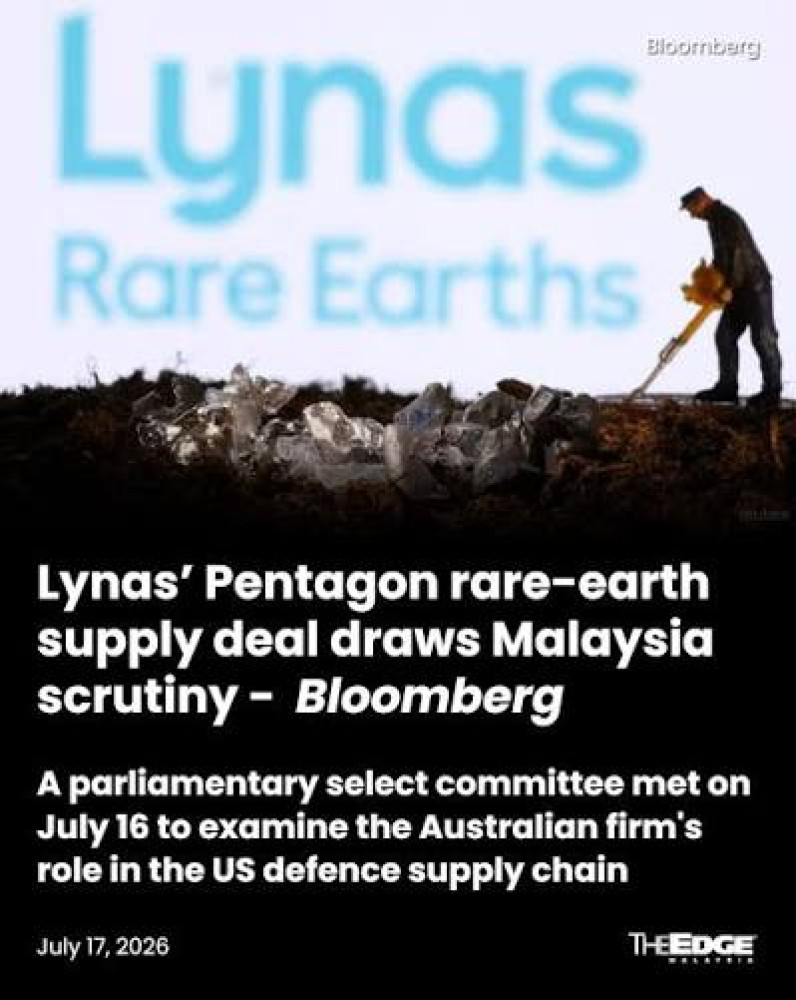

A Malaysian parliamentary committee has given the government a two-week deadline to clarify its position on Lynas Rare Earths’ supply agreement with the U.S. Department of Defense, as lawmakers weigh the deal’s implications for the nation’s foreign policy.
The Parliamentary Special Select Committee on International Relations and International Trade met on July 16 to examine the Australian company’s role in the U.S. defence supply chain.
Chaired by Subang Member of Parliament Wong Chen, the committee heard from ministry officials, non-governmental organisations, and Lynas executives before issuing its recommendations on July 17.
Lynas operates one of the world’s largest rare earths processing plants in Gebeng, Pahang. In March 2026, the company signed a binding letter of intent worth US$96 million to supply light and heavy rare earth oxide products to the Pentagon over four years, supporting U.S. national security and supply-chain resilience.
The committee recommended that the government develop a clearer foreign investment policy to safeguard national interests and sovereignty, and urged Putrajaya to issue an official position within two weeks. It also advised four ministries — Investment, Trade and Industry; Foreign Affairs; Natural Resources and Environmental Sustainability; and Science, Technology and Innovation — to seek legal counsel from the Attorney-General’s Chambers on the agreements.
“The committee convened this proceeding to examine and assess the impact of the supply agreement, which is viewed as potentially affecting Malaysia’s reputation as a steadfast supporter of Palestine,” the committee said in a statement.
Muslim-majority Malaysia does not have diplomatic relations with Israel and has long supported the Palestinian cause.
The hearing followed a memorandum from more than 20 civil society groups, including Greenpeace Malaysia, that urged tighter oversight of the country’s rare earth supply chain. The coalition, organised under the “No Rare Earth for Genocide” banner, opposed Lynas’ Pentagon agreement, citing U.S. military support for Israel’s war in Gaza.
Greenpeace Malaysia representative, Adam Azlan said the group opposes the deal because rare earths processed in Malaysia should not contribute to conflict or violations of international law.
Wong Chen had earlier told reporters that the hearing aimed to ascertain whether the deal breached any local policies. “What (are these) rare earths for? If it’s for renewable energy, we will be supportive of it, but if it’s for weapons, I think we should say no to it,” he said after receiving a memorandum from protesters outside parliament on July 6.
The committee also reviewed Malaysia’s foreign direct investment policies and discussed the need for a national policy framework for the rare earth industry, which it described as having significant economic potential. Lynas is one of only two major rare-earth miners outside China, which holds a near-monopoly over the global supply chain.





Comment on this Post
Comments (0)