
NEWS
PoliticsMine safety Must lnclude Workers' Homes, Communities
By Emmanuel Oluwafemi Oniyide | 31st Aug 2026 | 8:13 AM
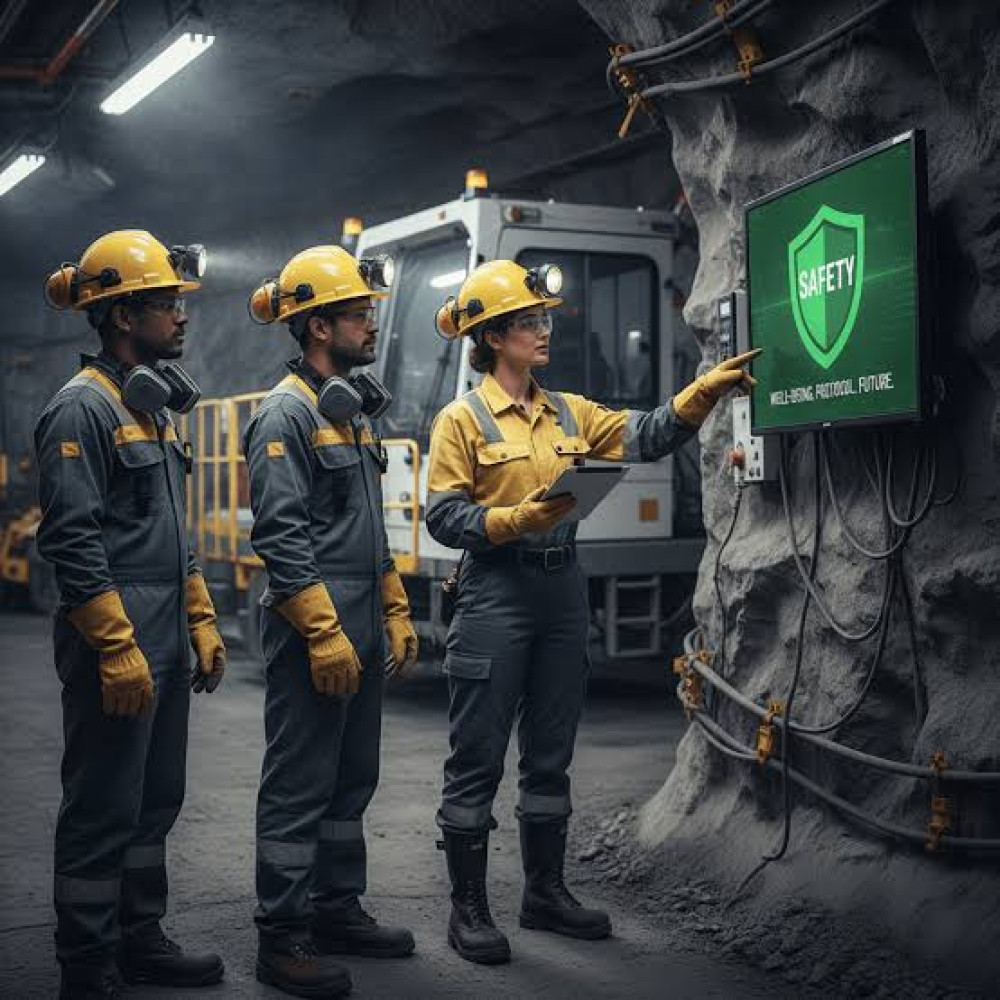

The mining industry must broaden its approach to health and safety by recognising that conditions in mineworkers' homes and communities directly affect their performance and risk exposure underground, according to speakers at a Wits Mining Institute dialogue held in Johannesburg on August 27.
The dialogue, themed "Beyond the Fence: How Community Environments Shape Health and Safety Performance in Mining", examined the relationship between socioeconomic conditions and safety outcomes in the sector.
"Poor living conditions, limited access to services, transport challenges and family pressures are all factors that could influence a worker before they even arrive at a mine, and zero harm cannot only be about the workplace activity," said Wits Mining Institute director and adjunct professor Dr Pontsho Twala. "Mental health, human rights, decent wages, education and awareness are also needed to form part of a broader safety framework."
Particular attention was given to the lived experiences of women in mining and the often-invisible risks female workers carry from their homes and communities into the workplace. Minerals Council South Africa safety and sustainable development deputy head Lerato Tsele noted that women remained a vulnerable group within the mining workforce, pointing to challenges ranging from personal protective equipment designed historically for male workers to sexual harassment and inadequate facilities.
"Women in mining are a vulnerable group in the workforce. We've made progress as the industry but we are still experiencing significant teething problems in meaningfully and safely incorporating women in the workplace," Tsele said.
She added that meaningful inclusion required changes to workplace design, equipment, culture, supervision and facilities, while highlighting the impact of childcare, household responsibilities and financial pressures on women arriving at work already physically and emotionally fatigued.
North-West University senior lecturer Dr Lucé Pretorius said mineworkers should be viewed as whole people moving continuously between their homes, communities and workplaces. She cited a recent study indicating that 31% of South African mining employees reported moderate to severe psychological distress, with women reporting higher levels than men.
"Numbers tell us what is wrong but they don't necessarily tell us why," Pretorius argued. She called for mining companies to combine downstream support such as counselling and employee assistance programmes with upstream interventions addressing working conditions, shift design, fatigue management and workplace facilities.
South32 Africa external affairs senior manager Noleen Dube noted that safety culture could not be developed exclusively within the controlled environment of a mine, as workers often came from communities where high-risk behaviour became normalised through everyday experiences involving transport, road safety and other social pressures.
"How do we integrate both the community and workplace safety cultures? In order for us to improve the safety culture and the workplace that we all want in the long term, we need to embed a safety culture within the broader society," Dube argued.
She called for greater involvement by men in initiatives aimed at improving women's safety and addressing gender-based violence, arguing that sustainable change could not be left to women alone.
Sibanye-Stillwater Learning Design Hub unit manager Mabatho Gaula said the industry should adopt a connected systems view of health, safety and wellbeing, considering the operating environment, workforce demographics, health indicators and external factors such as transport, infrastructure and municipal capacity as interconnected rather than separate areas of responsibility.
"When we improve an aggregate outcome, it does not mean that the critical risk has disappeared. This is why we need a broader response that is focused not only on critical risk identification but on learning, leadership and accountability," Gaula said.





Comment on this Post
Comments (0)