
NEWS
PoliticsNigeria Approves Copper Mining Licenses to Plug Supply Gap as IEA Warns Global Deficits
By Emmanuel Oluwafemi Oniyide | 4th Sep 2026 | 8:14 AM
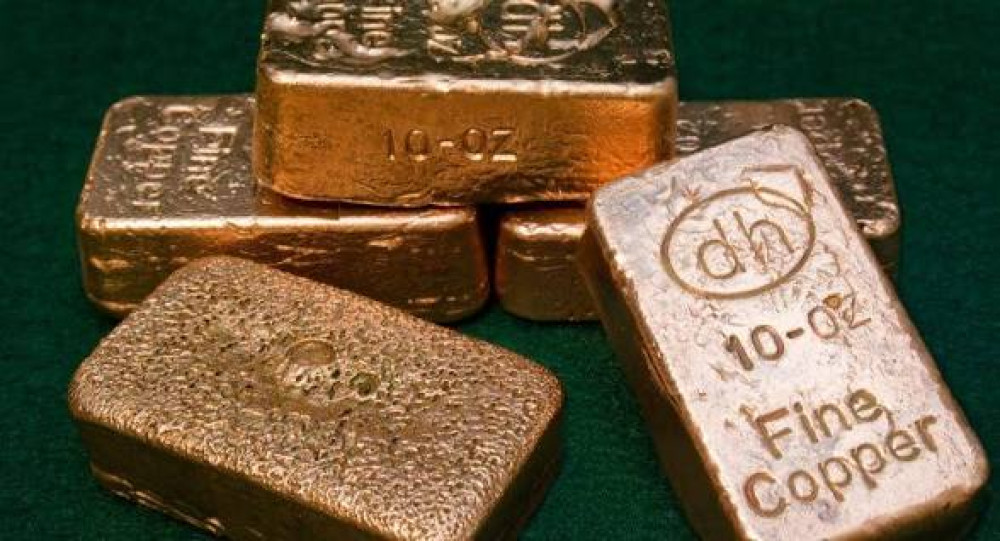

Nigeria is issuing exploration licenses into a global critical minerals market where copper faces a projected 25% supply deficit by 2035 and lithium investment has been slashed by 40%, according to the International Energy Agency's 2026 Global Critical Minerals Outlook released Thursday.
The report paints a mixed picture for mineral-rich countries: demand continues to outpace supply for key energy-transition metals, but investment has retreated at the very moment new production is needed most.
Copper's projected 2035 supply deficit stands at 25%, narrowed from approximately 30% in last year's outlook. The gap has shrunk but refuses to close entirely. "If mine project development proceeds at the current pace, the deficit persists regardless of demand scenarios," the IEA report stated. Overall critical minerals investment fell 9% in 2025, with lithium capital expenditure cut by roughly 40% — the sharpest battery-metals pullback in over a decade.
Refining concentration has worsened since the IEA's previous assessment. The top refining country now averages 72% of global capacity per mineral, up from 70% in 2023.
China alone refines approximately 50% of global copper production — a dramatic increase from roughly 15% in 2005 — and 85% of rare earths. The refining bottleneck presents a steeper challenge than mining concentration itself, with the IEA noting that "processing capacity remains far more geographically concentrated than extraction."
For Nigeria, which has accelerated exploration license issuance across its estimated 3 billion metric tons of iron ore potential and significant lithium deposits, the timing presents both opportunity and risk.
Discovery money is relatively accessible as global miners scout new sources to address supply gaps. But smelter money — the capital required to process raw ore into refined metal — is not.
"The downstream part of the supply chain requires the most capital, the longest lead times and the highest technical expertise," said Fatih Birol, IEA Executive Director, in a statement accompanying the report. "Mining is only the beginning of the story."
The refining gap is particularly acute for Nigeria's iron ore sector. While Chinese-linked investors have acquired positions in the Agbaja project and backed steel production plans, most projects remain at early stages. The country currently imports approximately 90% of its finished steel products despite holding Africa's second-largest iron ore reserves.
The IEA report also highlighted that Africa receives less than 5% of global critical minerals exploration spending, despite holding significant deposits of copper, cobalt, lithium and rare earths. Countries with established mining codes and processing infrastructure have attracted disproportionate investment, while those relying solely on exploration licenses struggle to advance projects beyond the feasibility stage.
The IEA projects demand for critical minerals will more than triple by 2040 under current climate policies. Copper demand alone is expected to rise 50% by 2035 as electrification accelerates.
Yet the investment pullback in 2025 suggests the supply response may lag demand growth, particularly for processed materials. "Markets are sending a price signal that supply is needed, but investment decisions are not following at the required scale," the report concluded.





Comment on this Post
Comments (0)