
NEWS
PoliticsSeyi Tinubu, Send Political Appointees Tailing You Back To Their Desks
By Mercy Omotosho | 22nd Jul 2026 | 10:54 AM
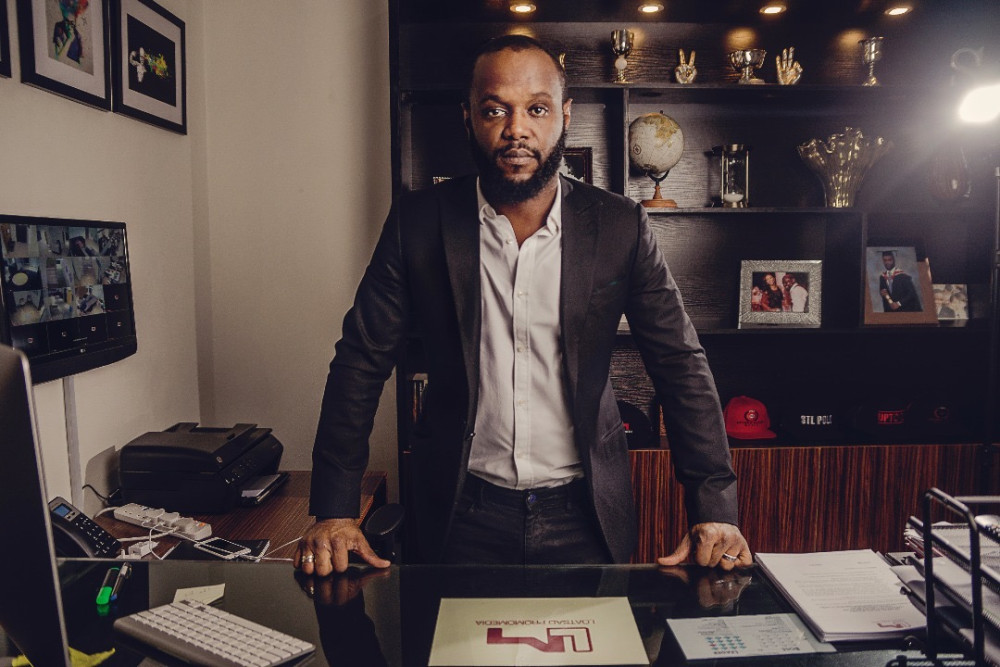

Leadership is not always about the speeches you make. Sometimes, it is about the people you allow around you.
Over the past months, Seyi Tinubu has become one of the most visible political figures in Nigeria without holding an elective or appointed public office. His outreach programmes, youth engagements and philanthropic activities have earned him admiration from supporters and critics alike. That is expected in a democracy.
What should not be normal, however, is the growing culture of political appointees abandoning their offices only to trail him from one event to another.
If Seyi Tinubu truly wants to build a legacy independent of his father’s presidency, one of the most responsible things he can do is politely tell these officials to return to their desks.
Nigeria has too many pressing problems for government officials to become full-time members of political entourages.
Every hour spent following personalities is an hour lost to signing files, supervising projects, resolving complaints, implementing policies or improving public service delivery.
Political appointments are not ceremonial titles.
They are positions of responsibility.
A minister, special adviser, agency head or presidential aide is employed to solve problems, not merely to appear in photographs or accompany influential figures across the country.
That is why the optics matter.
When Nigerians repeatedly see long convoys of government officials at events that are not official state functions, many begin to ask legitimate questions.
Who is running the offices?
Who is attending to pending memos?
Who is responding to urgent national issues?
Who is doing the actual work?
Those questions become even louder at a time when Nigerians are battling inflation, unemployment, insecurity and a high cost of living. Citizens naturally expect every public servant to maximise every working hour.
This is not an argument against Seyi Tinubu meeting young Nigerians.
Neither is it an argument against public officials attending important engagements occasionally.
Networking is part of governance.
Stakeholder engagement is necessary.
Public appearances are sometimes unavoidable.
But there is a clear difference between official representation and habitual political followership.
Once attendance begins to look permanent rather than occasional, governance suffers.
Public service should never revolve around personalities.
It should revolve around institutions.
Strong democracies are built when institutions function regardless of who occupies the spotlight.
When public officers become more concerned about remaining visible around influential individuals than being productive in their own offices, the wrong incentives are created.
Instead of competing to deliver results, people begin competing for proximity.
That culture weakens governance.
Ironically, asking political appointees to focus on their jobs would also benefit Seyi Tinubu himself.
One of the recurring criticisms directed at him is that some government officials appear overly eager to associate with him because he is the President’s son. The larger and more frequent these entourages become, the more such perceptions are reinforced, regardless of the true intentions behind them. Public confidence depends not only on integrity but also on the appearance of propriety.
If Seyi openly encourages officials to prioritise their official responsibilities, he sends a different message entirely.
He communicates that service matters more than symbolism.
Performance matters more than presence.
Results matter more than relationships.
That would earn him respect, even from many who disagree with his politics.
President Bola Tinubu himself has repeatedly emphasised that public officials are appointed to deliver on the Renewed Hope agenda. Government performance depends on political appointees remaining focused on the responsibilities entrusted to them. Recent directives requiring appointees seeking elective office to resign before pursuing political ambitions further reinforce the principle that public office should not be mixed with personal political interests. (Channels Television)
The same principle should apply here.
If an appointee has enough free time to accompany one individual across multiple engagements, perhaps that office is either underutilised or its responsibilities are not receiving the attention they deserve.
Nigeria deserves public servants who are known for transforming institutions, not for appearing in group photographs.
History remembers those who solved problems.
Not those who stood closest to power.
Seyi Tinubu has an opportunity to demonstrate a style of leadership that values productivity over praise and service over spectacle.
A simple message to political appointees would be enough:
“Thank you for your support. Now please go back to your offices and serve Nigerians.”
That statement would speak louder than any convoy ever could.





Comment on this Post
Comments (0)