
NEWS
PoliticsShettima Urges African Countries to Add Value to Mineral Resources
By Emmanuel Oluwafemi Oniyide | 24th Sep 2026 | 11:10 PM
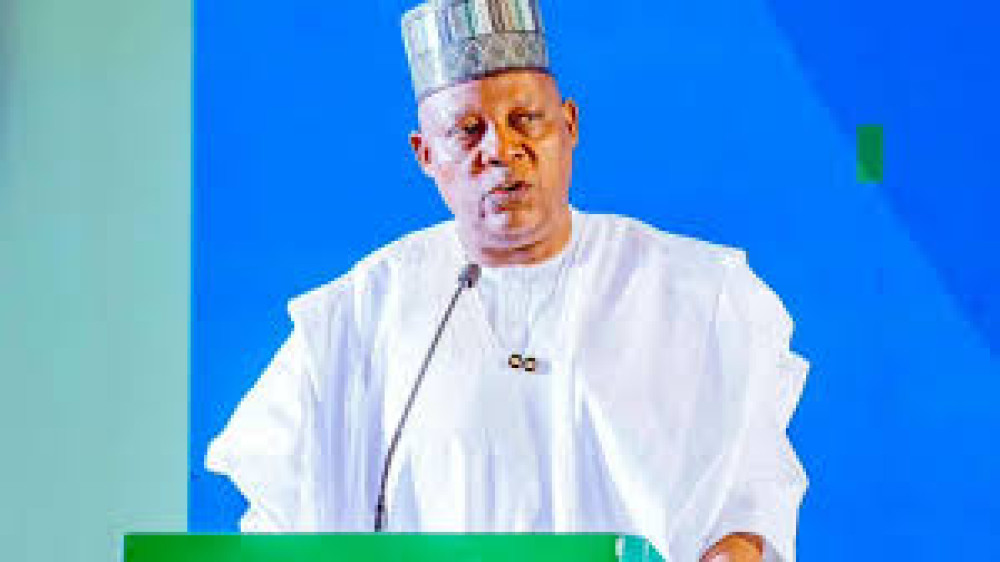

Vice President Kashim Shettima has urged African countries to stop relying on the export of raw mineral resources and instead focus on processing, manufacturing and other forms of value addition on the continent, warning that Africa cannot consider itself wealthy while communities around mineral deposits remain poor.
Shettima made the call on Monday, September 21, 2026, while representing President Bola Tinubu at the Third Africa Minerals Strategy Group (AMSG) High-Level Roundtable in New York, held on the sidelines of the 81st United Nations General Assembly. The roundtable was themed “From Resources to Wealth: Continental Cooperation for Mineral Value Addition.”
Shettima called for greater coordination among African countries, warning against competition for investment through lower royalties, weaker local-content requirements and excessive concessions. He advocated integrated markets, regional processing hubs and cross-border mineral corridors to help African countries achieve greater scale and strengthen their position in global mineral supply chains.
“Fragmentation leaves us exporting raw materials and buying finished goods at a premium. Cooperation gives our markets scale, our industries integration, our financing reach and our negotiations authority,” Shettima said.
Shettima highlighted Nigeria’s mining reforms, including efforts to promote local value addition, improve geological information, formalise artisanal mining and tackle illegal mining. He cited growing mining revenues and investments in lithium processing in Nasarawa State as examples of the opportunities available through domestic processing.
According to President Tinubu, Nigeria’s mining revenue rose from approximately ₦6 billion in 2023 to over ₦38 billion in 2024 and between ₦68.1 billion and ₦70 billion in 2025. Major foreign investment commitments and large-scale lithium processing capacity developed and commissioned in Nasarawa State demonstrate the possibilities, he said.
Shettima backed the AMSG’s Mutual Assured Development (MADE) Framework, which calls for predictable government policies and credible institutions, alongside responsible investment, technology transfer and local value creation. He also called for the Continental Integration and Economic Assurance Declaration (CIEAD) to move beyond its signing ceremony into an implementation programme with clear timelines, financing and accountability.
“The worth of a mine must be counted in the lives it improves. Jobs, industries, infrastructure, technology transfer, African enterprise participation and prosperity retained across generations must measure our progress from resources to wealth,” Tinubu said in his address delivered by Shettima.
Minister of Solid Minerals Development and AMSG Chairman, Dele Alake proposed the establishment of an African Artisanal Mining Formalisation and Safety Facility. Alake said the facility could help African countries formalise artisanal mining operations, improve access to safer equipment, provide occupational health and safety training and support environmental rehabilitation.
“Illegal mining must remain illegal, but artisanal miners should have a structured framework that allows them to operate legally and safely,” Alake said. He noted that many artisanal miners were breadwinners whose families depended on mining for survival, and expressed concern over recurring mine-site collapses across Africa.
Kenya’s Cabinet Secretary for Mining, Blue Economy and Maritime Affairs, Hassan Ali Joho, called for greater sharing of geological and mineral data among African countries. The AMSG comprises more than 30 African countries and seeks to give the continent a stronger collective voice on mineral governance, local processing and positioning in global supply chains.
A major outcome of the meeting was the signing of the Continental Integration and Economic Assurance Declaration, which is expected to provide a framework for cooperation on critical minerals, including value addition and policy coordination.




Comment on this Post
Comments (0)