
NEWS
PoliticsTinubu: The Unprecedented Trailblazer
By Bamidele Atoyebi | 24th Sep 2026 | 6:07 PM
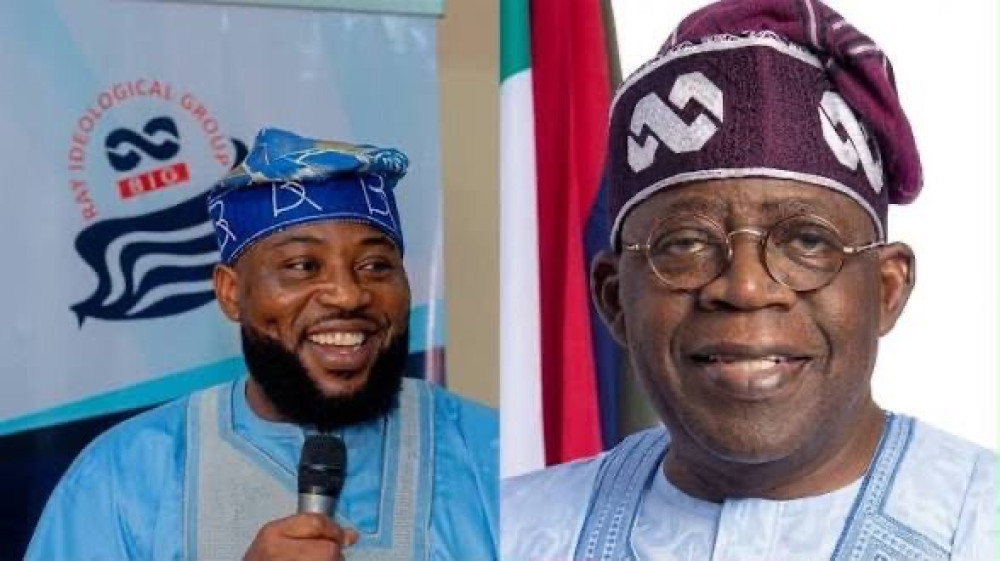

There are political arguments that beggars the question and will continue long after an administration has served out its term. However, there is another postulation that numbers, dates and completed milestones can address: what actually moved?
For us at the Bola Ahmed Tinubu Ideological Group (BAT-IG) this is not simply another administration doing what is expected of it. We look at the numbers, the projects and, perhaps most importantly, the things that had remained comatose for decades. These are the records we believe are worth documenting and passing on to our members, followers and generations yet unborn, so that they understand what was attempted, what was achieved and what still remains to be done.
I have personally held this conviction for a long time. I remember having a dream as far back as 2010 about Bola Tinubu becoming President of Nigeria. When the political atmosphere became extremely tense in the run-up to the 2023 election, I remained convinced that the outcome would eventually be different from what many expected. I remember people asking me whether I was sure he would win, especially when the political barometer appeared to be against him. I insisted that we had won. I was so convinced that I was among those who moved to Abuja from Lagos as early as January 2023, before the election itself.
Today, whatever anyone makes of that personal conviction, what interests me even more is what the record now shows.
Consider the Ima Gas Project. The gas resource was discovered in 1973. For 53 years, it remained undeveloped. On September 23, 2026, AMNI International and TotalEnergies took the Final Investment Decision on the project, with an expected investment of about $800 million and peak production of about 300 million standard cubic feet of gas daily. The State House itself described it as the unlocking of a five-decade-old gas resource.
Then came the South-East Development Commission. The Nigerian Civil War ended in 1970, with the Federal Government’s post-war promise of the 3Rs; reconciliation, rehabilitation and reconstruction. Yet a dedicated South-East Development Commission did not become law until 2024, when President Tinubu assented to the bill, 54 years after the war ended. Its board was inaugurated in February 2025.
In March 2026, another clock was reset. President Tinubu became the first Nigerian leader in 37 years to embark on a state visit to the United Kingdom. The previous comparable visit was by military President, Ibrahim Babangida in 1989. Tinubu also became the first Nigerian leader to be hosted by the British monarch at Windsor Castle.
Then there is the Lagos–Calabar Coastal Highway. Unlike the Ima Gas Project or the South-East Development Commission, this is not accurately described as a project conceived in the 1970s. The Minister of Works, David Umahi, said in 2026 that Tinubu had conceived the vision about 27 years earlier, while serving as Governor of Lagos State. Construction began under his presidency in 2024, and the first phase was commissioned in May 2025.
And the story is not limited to one corridor. In the South-East and South-South, work has advanced on the Enugu–Port Harcourt Expressway, the East–West Road’s Eleme Junction–Onne section, the Enugu–Abakaliki Road, the Onitsha–Warri Road and other strategic corridors. The Federal Government has also identified the East–West Road among the major highways under construction, reconstruction or rehabilitation nationwide.
These are not merely numbers to recite. They tell a story about the Nigerian habit of conceiving ambitious projects, abandoning them, and returning to them years later.
Tinubu’s administration has also recorded other milestones: major upstream oil and gas investment decisions, higher crude and condensate production, the expansion of NELFUND, increased national identification enrolment and major road construction across the country.
Of course, records do not automatically mean every Nigerian is feeling the impact equally. The cost of living, poverty, food prices, security and the quality of implementation remain important measures of government performance.
But there is one fact that is difficult to ignore: some things that had remained on Nigeria’s drawing board for decades have moved from promise to implementation under Tinubu.
For those of us who have followed this administration closely, these milestones are therefore more than political talking points. They form part of a record that we believe should be documented, examined and remembered. Not because any political leader should be idolised, but because leadership leaves behind lessons, institutions, projects and choices that future generations can study.
And perhaps that is the more enduring question of this administration: not simply what was announced, but what was finally made to move.
Bamidele Atoyebi, the writer of this article, is the convenor of BAT Ideological Group, National Coordinator of Accountability and Policy Monitoring PR, and a publisher of Unfiltered and Mining reports.





Comment on this Post
Comments (0)