
NEWS
PoliticsTrump Announces Venezuelan 65 Billion Barrels of Crude Oil Control now Bestowed on America
By Emmanuel Oluwafemi Oniyide | 31st Aug 2026 | 8:19 AM
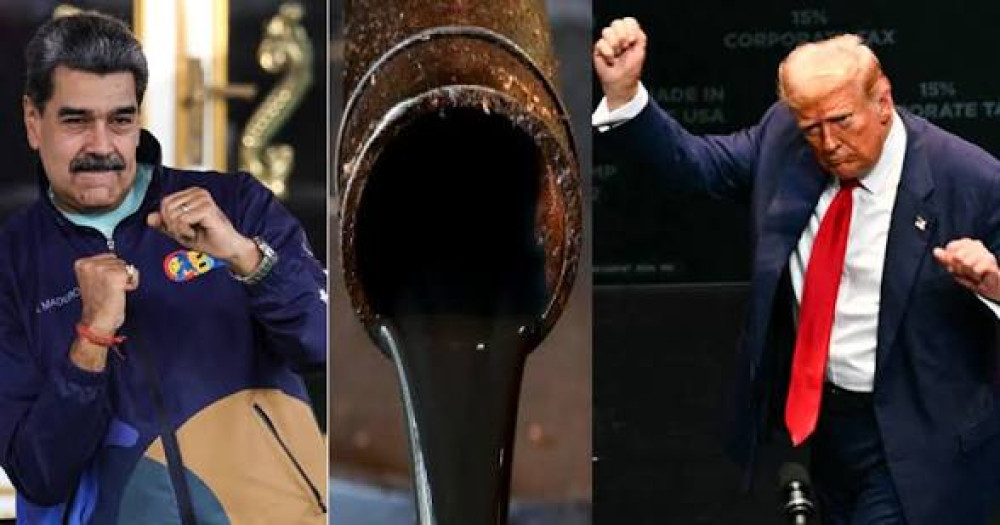

President Donald Trump announced on August 28 that the United States has struck an agreement with Venezuela granting Washington majority control over more than 65 billion barrels of the South American nation's proven oil reserves.
Trump made the announcement on his Truth Social platform, calling it "THE BIGGEST OIL DEAL IN WORLD HISTORY!". The agreement was negotiated by Secretary of State Marco Rubio, Defense Secretary Pete Hegseth and Venezuela's acting President Delcy Rodríguez.
Rodríguez's government said the deal involves development of 17 fields with proven potential of 65 billion barrels, could draw $100 billion in investment into Venezuela's oil industry and yield over $209 billion in tax revenue for Caracas. A U.S. official familiar with the deal said Rodríguez granted the company 100-year rights to develop the oil fields, with the United States receiving 55% effective output of the new private company.
The announcement comes nearly nine months after the U.S. military, at Trump's direction, captured then-President Nicolás Maduro in a January 3 operation and flew him to the United States to face federal narcoterrorism and drug trafficking charges. Maduro's deputy, Delcy Rodríguez, was sworn in as interim president on January 5.
Trump faces mounting pressure to address high gas prices as the U.S.-Israel war against Iran reaches a six-month mark, dramatically slowing Gulf oil movement through the Strait of Hormuz. The average U.S. gas price stood at about $4.09 a gallon on Friday, up from $3.21 a year earlier. The U.S. has tapped its strategic petroleum reserves, which fell below 300 million barrels in early August.
Despite the Venezuela deal, the United States continues to import substantial crude oil from African nations. Official trade data shows the U.S. spent $4.00 billion on oil imports from Egypt and $3.99 billion from Nigeria in the first quarter of 2026.
Nigerian crude imports totaled $578.78 million in Q1 2026, a 15% decline from $681.40 million in the same period of 2025, according to U.S. Census Bureau and Bureau of Economic Analysis data.
The U.S. continues buying African crude because its Gulf Coast refineries are structurally configured to process heavy and medium grades, while U.S. shale production is primarily light. Nigerian light sweet crude remains valuable for American refiners.





Comment on this Post
Comments (0)