
NEWS
PoliticsTürkiye Targets Somalia’s 10,200-ton Uranium Reserves
By Emmanuel Oluwafemi Oniyide | 1st Jun 2026 | 10:56 AM
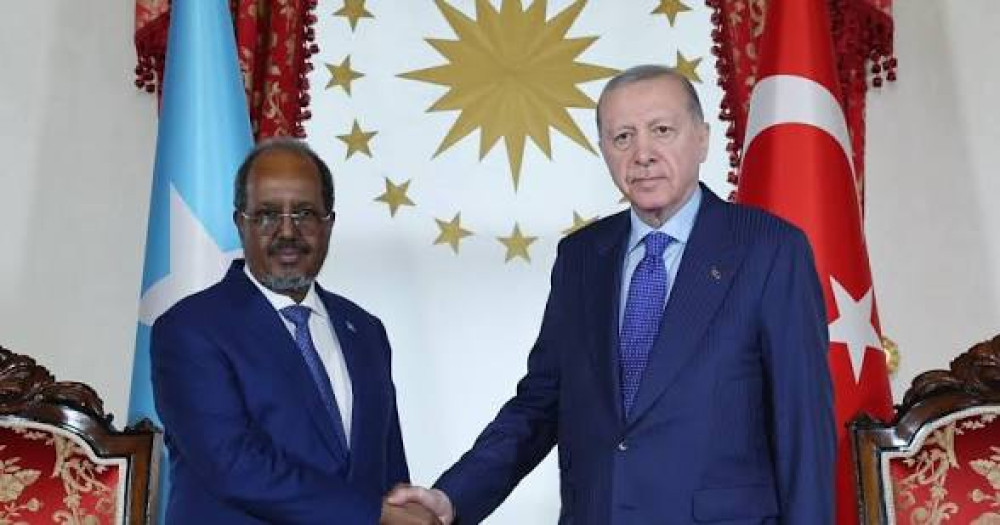

Türkiye is expanding its footprint in Africa’s mineral industry, with Somalia seeking Turkish support to unlock uranium and critical mineral deposits estimated to include more than 10,200 tons of uranium resources.
The move broadens the growing Ankara–Mogadishu energy partnership beyond offshore oil and gas into mining, as competition intensifies for Africa’s strategic mineral wealth.
“Our country has plenty under the ground,” Somali Petroleum and Mineral Resources Minister Dahir Shire Mohamed said, highlighting Mogadishu’s interest in deeper cooperation with Türkiye on uranium and critical minerals exploration.
“We want to extract and develop them in a peaceful, reasonable and friendly way,” Mohamed said.
According to International Atomic Energy Agency and OECD Nuclear Energy Agency data, Somalia holds an estimated 10,200 tons of uranium resources, including around 7,600 tons considered potentially commercially recoverable. Surveys have also identified deposits of lithium, copper, titanium, gold, and rare earth elements, though much of Somalia remains underexplored after decades of instability.
Somalia’s outreach comes as Türkiye strengthens its broader push into Africa’s extractive industries. Nigeria recently signed a mining cooperation agreement with Türkiye aimed at deepening collaboration in exploration, mining technology, digitisation, and technical capacity building within Nigeria’s solid minerals sector, estimated to hold up to $700 billion in untapped mineral potential.
Turkish officials have increasingly framed such partnerships as part of a wider effort to deepen cooperation in energy and natural resources across Africa.
In Somalia, Ankara’s influence already stretches far beyond mining. Türkiye has emerged as one of Mogadishu’s closest partners across security, infrastructure, trade, education, and energy development. That relationship deepened further with Türkiye’s offshore drilling partnership with Somalia, which includes deployment of the Turkish drilling vessel Cagri Bey for exploration activities off Somalia’s coast, marking Türkiye’s first overseas drilling mission.
Talks between Somali and Turkish officials in Istanbul also centred on reviving a 2016 mining memorandum covering geological mapping, mineral exploration, technical training, and investment cooperation.
“We want to review that MoU and see where we can start,” Mohamed said. “We want to form a technical committee to review the data we have.”
Türkiye’s expanding role in Somalia and Nigeria highlights Ankara’s growing ambitions in Africa’s resource sector at a time when global competition for uranium, rare earths, and critical minerals is accelerating. For Somalia, deeper ties with Türkiye offer a pathway to develop long-dormant mineral reserves while leveraging foreign expertise and investment to build a future mining industry.




Comment on this Post
Comments (0)