
NEWS
PoliticsWhen Money, Rice Lose Their Power: Lesson Osun Election Should Teach Politicians
By Bamidele Atoyebi | 18th Aug 2026 | 9:29 AM
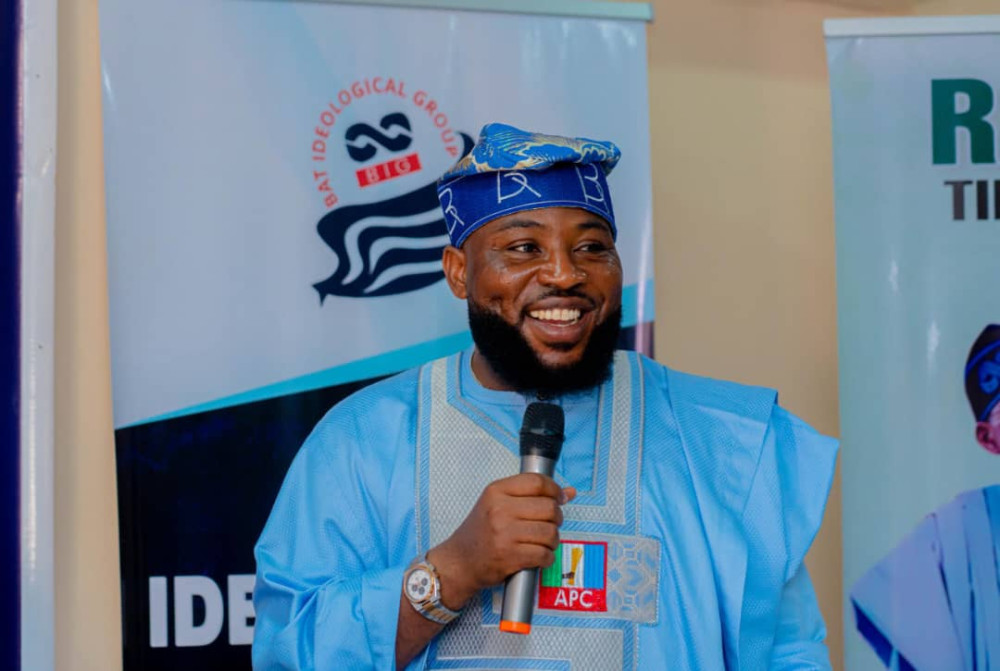

By Bamidele Atoyebi
I have always approached politics and policy from a prophetic perspective. Even before the emergence of the Bola Ahmed Tinubu Ideological Group (BAT-IG) I consistently asked a simple but uncomfortable question: When a politician or political supporter says, “I will deliver the votes,” how exactly does he plan to deliver them?
In Nigerian politics, we have become too comfortable with the language of “I have my people.” A politician tells you he has secured a ward, a local government, a bloc of voters or an entire community. But when you ask what his strategy is, the answer is often hidden behind money, inducements, manipulation, misinformation and, sometimes, bags of rice but rarely conviction.
For years, we have watched politics reduced to the exchange of temporary relief for permanent political loyalty.
Give them money, rice or promises. Mobilise them. Collect their votes then disappear until another election. But, I have always believed that this model has an expiry date and Osun state has just given us another reason to pay attention.
The 2026 Osun governorship election was not merely another contest between political parties. It was a test of political structures, personalities, alliances, incumbency, grassroots mobilisation and, most importantly, the relationship between politicians and the people.
The result eventually declared by INEC was Ademola Adeleke of the Accord Party: 511,067 votes, against Bola Oyebamiji of the APC, who polled 444,815 votes.
That result should provoke more than celebration from one camp and disappointment from another. It should provoke reflection because the most interesting lesson from Osun may not be who won.
It may be why voters continue to make choices that political strategists sometimes assume they have already purchased.
There is a popular celebratory line making the rounds after the election:
“Ojú ti owó, ojú ti ìrẹsì, a ṣe ẹlẹ́yàn.” Loosely translated: “Money is ashamed, rice is ashamed; so you don’t have people.”
Whether one agrees with every interpretation of the song or not, its symbolism is powerful. It captures a growing political reality: you cannot permanently purchase the conscience of a people.
You may influence a voter for a day. You may put money in someone’s hand. You may distribute food. You may organise elaborate political structures. But the ballot remains an individual decision. This is precisely why I have always questioned those who boast about their ability to “deliver” votes.
Deliver them how? Through ideas? Through genuine grassroots relationships? Through measurable development? Through convincing people that your candidate understands their problems?
Or through inducements that reduce citizens to electoral commodities?
There is a fundamental difference.
A politician who builds a relationship with the people is building political capital.
A politician who merely distributes money is often renting temporary loyalty.
And rented loyalty expires.
Osun’s political history makes this even more interesting. The state has witnessed fiercely contested elections, political realignments and major judicial battles. The 2018 governorship election eventually ended with the Supreme Court affirming Gboyega Oyetola’s victory, while the 2022 election saw Adeleke defeat Oyetola, with the courts ultimately affirming Adeleke’s mandate.
Now, four years later, Adeleke has secured another victory, this time under the platform of the Accord Party rather than the PDP platform on which he won in 2022. His political movement survived a major party realignment, while the PDP did not field a candidate in the 2026 Osun governorship election.
That alone should teach political actors something:
Political structures matter, but people matter more.
A structure without people is an empty building.
A political godfather without genuine followers is merely a man with a title.
And a bag of rice cannot become a development policy.
This is where people-focused politics becomes important.
At BAT Ideological Group, this is the direction we are pursuing.
We are not interested in a political culture where the people are remembered only when their votes are needed . We should be thinking about what happens after the election.
How do we improve education?
How do we strengthen healthcare?
How do we create jobs?
How do we support small businesses?
How do we improve infrastructure?
How do we make public institutions work?
How do we ensure that budgets translate into actual projects?
How do we monitor policies and hold elected officials accountable?
That is where the real battle is.
Because if all we do is teach politicians how to win elections, we have not solved Nigeria’s political problem.
We must teach politicians how to govern after winning.
And we must teach citizens that their votes are not commodities.
This is also why I believe political communication must evolve.
The era where political messaging is simply “Vote for me because I gave you something” should give way to “Vote for me because I have demonstrated capacity, presented a credible plan and can be held accountable.”
Rice should not be the policy.
Money should not be the manifesto.
And political rallies should not become substitutes for governance.
The Nigerian voter deserves more.
The young person looking for employment deserves more.
The trader struggling with inflation deserves more.
The farmer who needs infrastructure deserves more.
The child sitting in an under-equipped classroom deserves more.
The patient in a poorly equipped hospital deserves more.
And the taxpayer funding government deserves more.
This is the prophetic perspective I have consistently maintained: politics must eventually return to the people.
You can deceive people for a season.
You can manipulate sentiments.
You can buy temporary allegiance.
You can manufacture political noise.
But eventually, reality dawns.
And when reality speaks, no amount of rice can silence it.
The lesson of Osun should therefore not be reduced to “Party A defeated Party B.”
It should be bigger than that.
It should force every political strategist, party leader, aspiring candidate and so-called vote deliverer to ask:
Have we actually built a relationship with the people, or have we simply built a system around their temporary needs?
Because the future of Nigerian politics cannot be about who distributes the most.
It must be about who delivers the most value.
That is the politics I believe in.
That is the politics we should be building.
And that is why, at BAT-IG, we are choosing the harder but more sustainable path: people before politics, development before propaganda, accountability before celebration, and governance before electoral gimmicks.
The rice may finish.
The money may finish.
The campaign may finish.
But the consequences of governance remain.
That is the real election.




Comment on this Post
Comments (0)