
NEWS
PoliticsNamibia, Niger, South Africa on Standby as US Hunts for Uranium in $2.7 Billion Drive
By Emmanuel Oluwafemi Oniyide | 2nd Sep 2026 | 7:43 AM
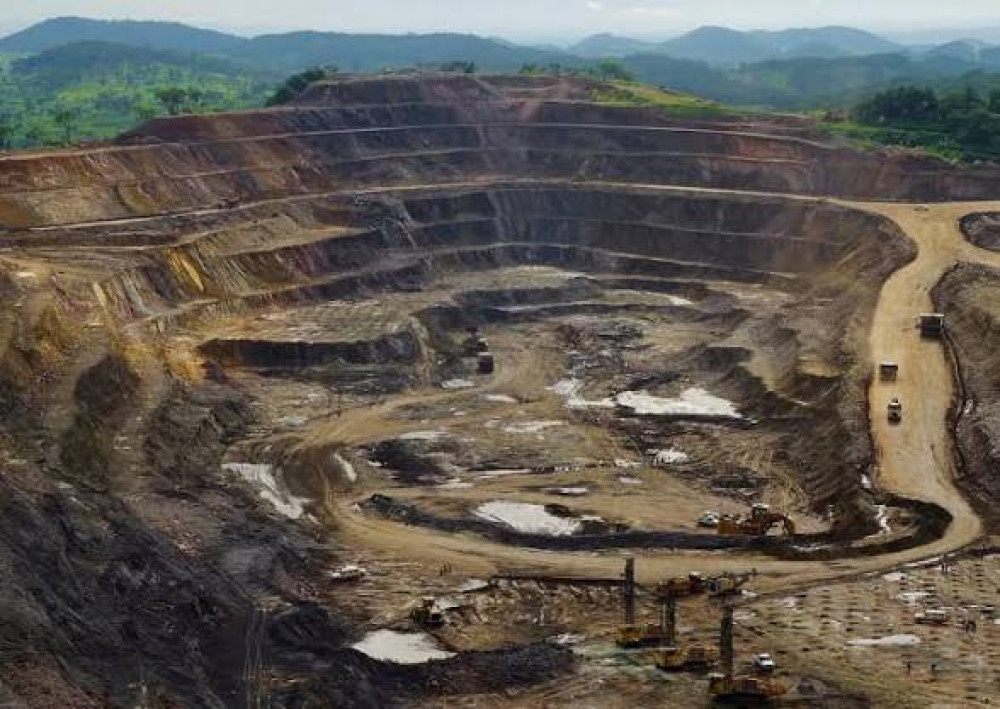

U.S. Uranium production more than tripled in 2025, but the increase covered only a small share of the country's nuclear fuel needs, leaving Washington dependent on imports and turning attention to uranium-rich African nations including Namibia, Niger and South Africa.
According to the U.S. Energy Information Administration, American mines produced 2.1 million pounds of uranium concentrate in 2025, up from 657,000 pounds in 2024 and the highest level since 2017. Exploration and development drilling also increased, with total footage surpassing 1.0 million feet, up from 0.6 million feet in 2024.
Even so, domestic output remains far below demand. U.S. nuclear operators purchased 46.9 million pounds of uranium concentrate equivalent in 2025, yet only 7% of deliveries came from domestic sources.
Canada was the top foreign supplier at 32% of total deliveries, followed by Kazakhstan at 28% and Australia at 15%.
That dependence is drawing more attention to Africa, where Namibia, Niger and South Africa hold some of the continent's largest uranium resources.
Namibia is already part of the U.S. supply chain, accounting for 4% of uranium delivered to American nuclear operators in 2025 — equivalent to roughly 1.88 million pounds. Any deeper U.S. push into Namibia will, however, run into strong Chinese competition.
The giant Husab mine is 90% owned through Taurus Minerals, backed by China General Nuclear Power Group and the China-Africa Development Fund. Chinese firms have invested more than $2.6 billion in Namibia's uranium sector since 2012, securing positions across three operating mines and one advanced development project.
Niger presents a different opportunity. Since the 2023 military takeover, the junta has moved against key French-linked uranium interests and sought greater state control of the sector. Niger holds 1,800 tonnes of unsold uranium on its territory, with ongoing legal disputes making some international buyers hesitant to finalize purchases.
The Atlantic noted that "Niger's government has been unable to find a way out of an impasse over the stockpile of uranium it seized from the French company Orano. Quiet US mediation on this issue could help resolve it, and in so doing, Washington could advance US interests in the region as well."
South Africa is also part of the U.S. uranium supply chain, having supplied 660,000 pounds to American nuclear operators in 2024, although its 2025 volume was withheld for commercial confidentiality.
The U.S. challenge extends beyond securing uranium from mines. The concentrate must first be converted and enriched before it can be used as nuclear fuel — areas where China has built substantial domestic capacity.
In response, the U.S. Department of Energy announced $2.7 billion in January 2026 to expand domestic uranium enrichment capacity and reduce reliance on foreign suppliers. The funding was awarded to three companies — American Centrifuge Operating, General Matter and Orano Federal Services — each receiving $900 million under milestone-based task orders.
"The U.S. Department of Energy today announced $2.7 billion to strengthen domestic enrichment services over the next ten years," the agency said in a January 5 statement. "In support of President Trump's commitment to enhance energy security and reduce reliance on foreign suppliers, the historic investment expands U.S. capacity for low-enriched uranium and jumpstarts new supply chains for high-assay low-enriched uranium."
A Government Accountability Office report found that the U.S. has lacked the ability to produce enriched uranium that meets certain national-security requirements since 2013, increasing pressure on Washington to rebuild its domestic nuclear fuel supply chain.




Comment on this Post
Comments (0)