
NEWS
PoliticsNigeria’s $350 Million Solid Minerals Exports Face Value-Addition Challenge
By Emmanuel Oluwafemi Oniyide | 16th Oct 2026 | 10:38 AM
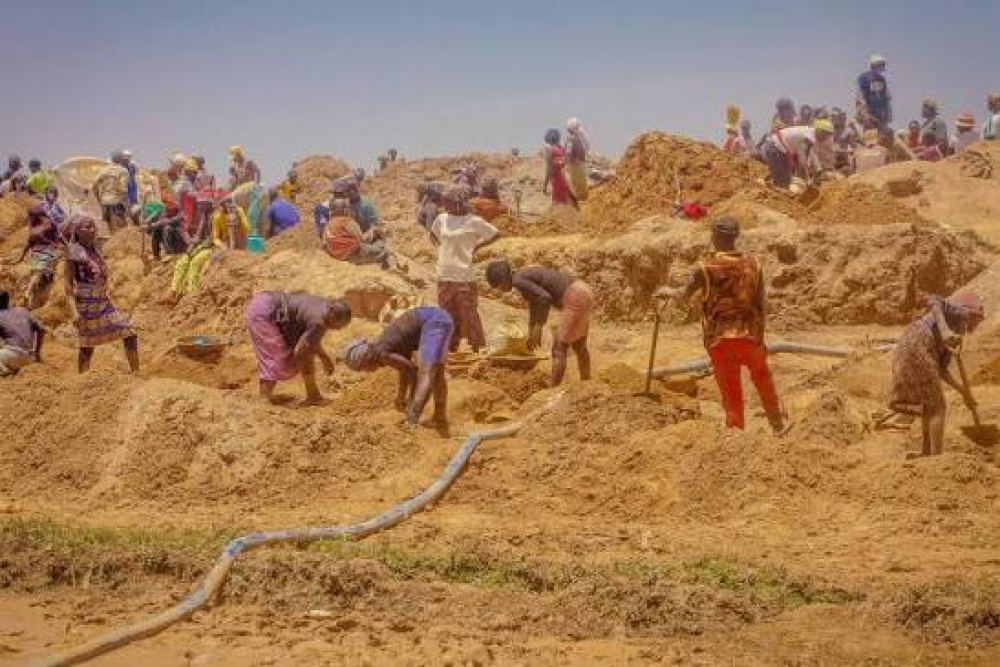

Nigeria exported $350 million worth of solid minerals in 2025, but limited processing capacity, weak supply chains and skills shortages are restricting the country’s ability to capture greater value from its mineral resources.
The export figure, reported by the Nigerian Export Promotion Council (NEPC), formed part of Nigeria’s total exports of $6.1 billion in 2025, highlighting the solid minerals sector’s contribution to non-oil trade and its potential to generate additional foreign exchange through domestic processing and manufacturing.
Speaking at a panel discussion on developing Nigeria’s gemstone value chain during Nigeria Mining Week in Abuja, industry stakeholders called for closer cooperation between government and private operators to build a more competitive domestic industry.
Adeniran Ajibade, president of the Gemstones Miners and Marketers Association of Nigeria (GMMAN), said Nigeria needed to move beyond exporting unprocessed gemstones by developing local capacity to identify, grade, cut and polish stones and manufacture finished jewellery.
He warned that selling gemstones of different grades as mixed consignments could weaken Nigerian suppliers’ bargaining power and allow international buyers to secure materials at less favourable prices for local producers.
Ajibade called for sustained government support for gemstone faceting and jewellery-making, alongside improved technical expertise in identification, grading and valuation.
He also disclosed that GMMAN was working towards establishing an international gemstone buying centre in Nigeria to connect local producers with international customers and create a more organised trading environment.
Tanzania’s experience, he said, demonstrated the potential benefits of cooperation between government and private-sector operators in developing gemstone processing and international market recognition.
Ajibade also highlighted opportunities in Nigeria’s domestic market, arguing that locally processed gemstones and jewellery could reduce dependence on imported products while creating business opportunities across the value chain.
Segun Okoh, another participant at the panel, called for the establishment of gemstone-processing clusters connecting small-scale miners, traders, processors and jewellery manufacturers.
Such clusters could help coordinate the movement of gemstones from extraction to finished products, improve market access and distribute economic benefits across different groups, including women and young people in mining communities.
Okoh added that a more organised value chain could improve investor confidence by providing clearer commercial links between raw-material suppliers, processors and buyers.
Developing these clusters would require effective coordination, infrastructure, financing and reliable access to markets to ensure that processing businesses remain commercially viable.
Tope Adebanjo, chief executive officer of Laurel School of Mines, identified training, mentorship and practical experience as essential to building the workforce needed to expand Nigeria’s gemstone industry.
He said his organisation had partnered with the Bank of Industry on a programme that trained more than 8,000 Nigerians across the country’s six geopolitical zones in gemstone-related skills.
The organisation had also awarded full scholarships to 10 Nigerians from different states.
Adebanjo stressed that training should extend beyond graduation, with continued mentorship and practical instruction helping participants develop the skills required by industry.
The discussions highlighted the need to integrate exploration and responsible mining with gemstone grading, processing, jewellery production, branding and marketing.
With solid minerals exports reaching $350 million in 2025, the challenge for Nigeria is to expand domestic processing and strengthen local supply chains so that a greater share of the value generated from its mineral resources remains within the economy.





Comment on this Post
Comments (0)