
NEWS
PoliticsWorld Bank Targets Fivefold Increase in Critical Minerals Financing by 2030
By Emmanuel Oluwafemi Oniyide | 16th Oct 2026 | 10:42 AM
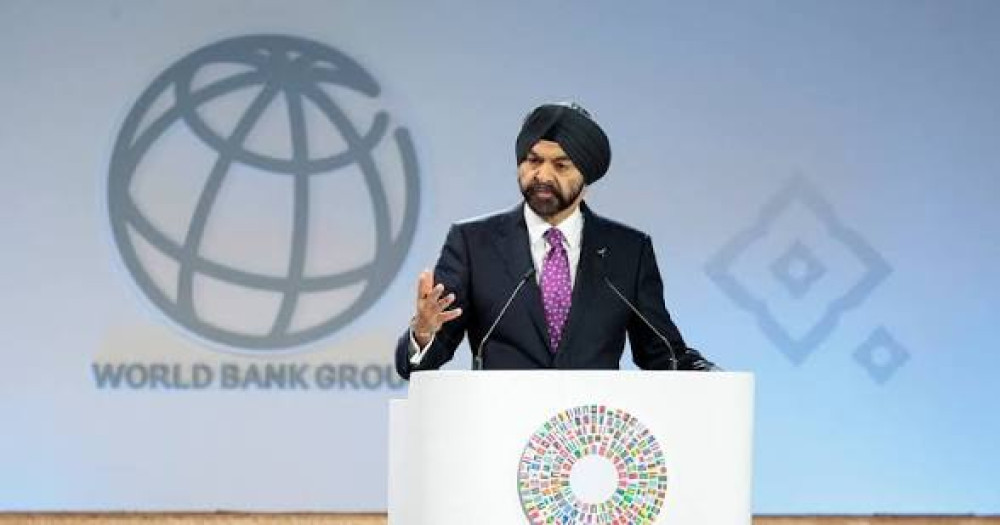

The World Bank aims to increase its critical minerals financing fivefold over the next five years, targeting $19 billion in funding between fiscal 2026 and 2030 as it seeks to expand mineral production, processing and domestic industrial development.
World Bank President, Ajay Banga announced the target on Friday during a plenary session at the International Monetary Fund and World Bank annual meetings in Bangkok, Thailand.
The lender’s new Metals and Minerals implementation plan represents a substantial increase from the $3.6 billion allocated to critical minerals financing between fiscal 2021 and 2025.
The strategy also identifies 20 countries with which the World Bank can partner on critical minerals development projects.
The financing initiative is intended to help resource-producing countries develop domestic industries and retain a greater share of the economic benefits generated by their mineral resources.
“In critical minerals, we plan to quintuple our business in five years,” Banga said. “This week, we launched our first country compacts with MDB partners—to build local industries and keep more jobs and value at home.”
The approach reflects growing interest in strengthening mineral-processing capacity in producing countries rather than concentrating investment exclusively on extraction and exports.
Critical minerals, including lithium, cobalt, copper and graphite, are important to battery manufacturing, electricity networks, renewable energy technologies and other industrial applications.
For developing economies, financing that supports processing facilities and related infrastructure could help create industrial employment, improve technical capabilities and expand opportunities for domestic suppliers.
However, the extent of these benefits will depend on project selection, financing conditions, infrastructure availability and the ability of participating countries to develop commercially sustainable industries.
The expansion comes as the United States, the World Bank’s largest shareholder, calls for the institution to devote more resources to critical minerals production and processing.
US Treasury Secretary Scott Bessent said earlier in the week that the bank should do more to support mining and processing capacity through project de-risking, financing and investment in enabling infrastructure.
He also identified deep-sea mining as an area for consideration.
Banga did not mention deep-sea mining in his prepared remarks. The World Bank’s implementation plan instead calls for a precautionary approach to the emerging sector, stating that any engagement and investment must comply with the institution’s applicable policies.
Banga also outlined the World Bank Group’s broader financing performance during the 2026 fiscal year, which ended on June 30.
The group mobilised $112 billion in private capital, more than three times the amount recorded in fiscal 2022, before Banga assumed his role.
Combined with lending from the World Bank Group’s own balance sheet, this brought total financing to $230 billion in fiscal 2026, according to Banga.
The critical minerals initiative will build on these financing activities as the bank seeks to support projects that connect mineral extraction with domestic processing and wider economic development.
The World Bank’s new plan targets $19 billion in critical minerals financing over fiscal 2026–2030, up from $3.6 billion during the previous five-year period.





Comment on this Post
Comments (0)