
NEWS
PoliticsMinerals Commission Defends Northern Ashanti Mines Lease Termination Over $8.3 Million Debt
By Emmanuel Oluwafemi Oniyide | 28th Oct 2026 | 8:26 AM
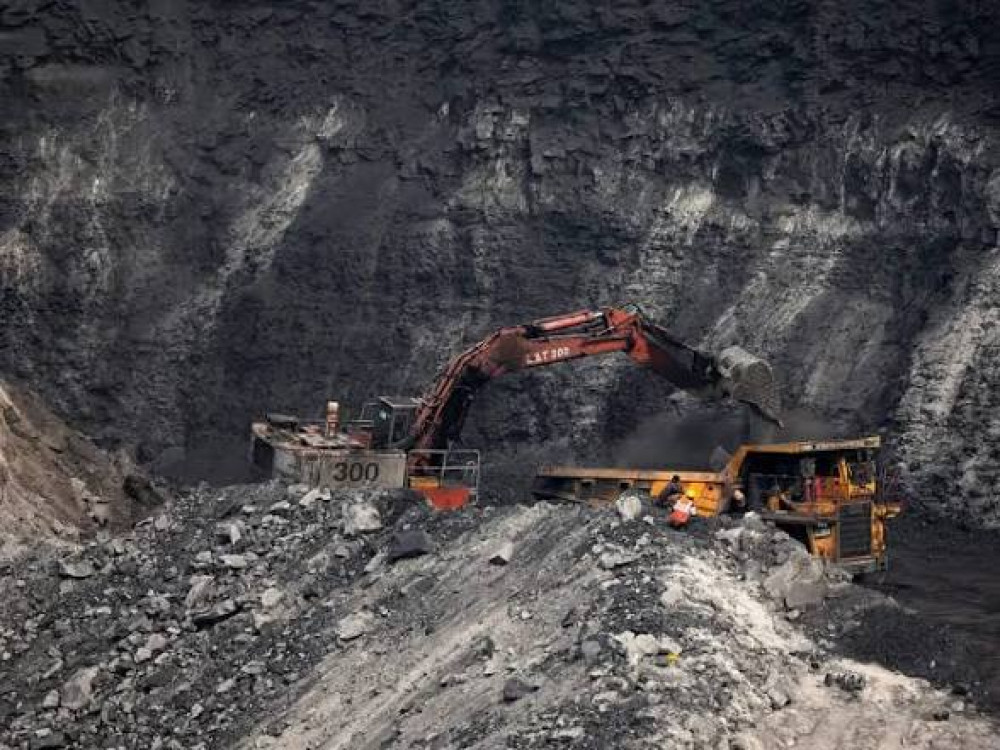

The Minerals Commission has defended its decision to terminate the mining leases and prospecting licences of Northern Ashanti Mines Limited (NAML), stating that the company owed US$8.33 million in outstanding Annual Mineral Right (AMR) fees and had failed to undertake meaningful mining operations for more than two years.
The Commission said in a press release dated October 27, 2026, that the termination complied with the Minerals and Mining Act, 2006 (Act 703), the Minerals and Mining (Licensing) Regulations, 2012 (L.I. 2176), and the terms of the agreements with the company.
According to the Commission, NAML — formerly known as Owere Mines — acquired a mining lease covering 595 cadastral blocks in January 2010. The company failed to pay the required fees between 2010 and 2025, resulting in an outstanding debt of US$8.33 million. It also owed US$49,928 in fees for prospecting licences covering the period from 2019 to 2025.
The Commission said it issued a notice to the company on April 14, 2025, directing it to settle the outstanding payments, but the company failed to comply within the stipulated period.
In addition to the unpaid fees, the Commission said investigations showed that NAML had failed to undertake meaningful mining activities on its concession for more than two years, contrary to Section 69(1) of Act 703.
Following the company’s failure to remedy the breaches, the Commission requested the Lands Minister’s approval to cancel its licences on April 7, 2026. The Minister approved the request on April 24, and the licences were cancelled on April 30, 2026.
“The Minerals Commission wishes to categorically state that it acted lawfully and followed due process at every stage,” the statement said. “The Company was given every opportunity to regularise its position and yet chose not to. The law is the law. Mineral rights are not an inheritance”.
The Commission maintained that all mineral rights holders, regardless of whether they are indigenous companies, must comply with statutory requirements, including paying prescribed fees and undertaking meaningful mining operations.
It said the terminated mineral rights had reverted to the State, without extinguishing the company’s outstanding liabilities, including its debt to the government. The Commission added that it reserved the right to pursue the company to recover all outstanding amounts owed to the State.
The Commission also justified securing the concession on October 22 — when its officers, accompanied by military personnel, entered the site to enforce the termination — saying the government had a responsibility to protect assets that had reverted to the State from being dissipated or taken over by encroachers and other illegal actors.
Northern Ashanti Mines has disputed the Commission’s account, describing it as containing “falsehoods, untruths and half-truths”.
NAML said it was never served with a letter alleging any statutory breach before the Commission moved to revoke its mining lease and prospecting licence.
According to the company, the only communication it received was the letter dated April 30, 2026, notifying it of the purported revocation.
The company also challenged the debt figure, saying an audit communication issued by the Commission in May 2026 placed its debt at approximately $2.4 million, separate from a legacy debt of $8.3 million owed by Owere Mines, the previous operator, before NAML acquired the mine in 2020. NAML added that it had paid more than $1 million towards reducing its outstanding obligations and had proposed being given additional time to settle the debt, citing its investments in mine development and the construction of a gold processing plant.
NAML further rejected the Commission’s assertion that it had failed to undertake meaningful mining operations, arguing that mine development and infrastructure preparation constituted meaningful mining activity, and that the Commission had granted permits for various projects, including the construction of a new processing plant and ore stockpiling. The company said its mining fleet was operating day and night on the concession.
NAML has filed for judicial review at Ghana’s High Court, seeking to overturn the termination of its mining lease covering the Konongo Gold Mine in the Ashanti Region. The company is asking the court to restrain the government from taking over the concession, claiming it risks losing investments exceeding $110 million (with the company citing nearly $200 million in total investment since 2020).
NAML said it subsequently wrote to the Minister through its lawyers on May 4 and petitioned him on May 20, and claimed that on October 22, officials of the Lands Commission, accompanied by military personnel, visited its mine premises and ordered staff to vacate by midday. It also claimed to have received information that foreign companies, reportedly of Chinese origin, were in Ghana to take over the mine, and alleged that the deployment of military personnel and the eviction order were intended to facilitate the handover.
The company argued that the termination could only be effected in accordance with Section 68 of Act 703 and Regulation 200 of L.I. 2176, and questioned whether the required notice, remedy and show-cause procedures were followed.
The High Court has not yet ruled on the termination or granted the requested relief.
The Commission described the company’s media campaign as inappropriate while the matter remained before the courts. “Having done so, it is improper and contemptuous of the judicial process for the Company to simultaneously resort to the court of public opinion, peddling false narratives and soliciting sympathy for a matter it flagrantly violated,” the statement said.
The Commission reaffirmed its commitment to enforcing Ghana’s mining laws, insisting that it would not be distracted by what it described as media theatrics.





Comment on this Post
Comments (0)